Opinions expressed on this blog are my own and do not represent any other organization or affiliation I may have.
Showing posts with label spelling. Show all posts

Tuesday, 3 February 2015

5 Peer Conferencing Revision Strategies That Actually Work

From this post I found some fun and interactive ideas to help my students with revision

Revising and editing a peer's writing helps students learn to work as a team. It also gives them a fresh perspective on the proofreading process that will help them become more aware as they write and edit their own work. So, how can you make the peer review and editing process engaging, meaningful and fun for students? Here are five ways to get your students excited about peer review that actually work!

  1. Neon Revision

    Many kids don't know what or where to mark when reading another student's work. Neon revision is an approach that can really help. First, give each student or pair of students three highlighters and these instructions:

    Highlighter Markers: 3 Colors
    Yellow – Mark the first word of each sentence. Questions to think about: Is there variety? Does the writer use transitional words? Are there any sentence fragments or run-ons?
    Pink – Highlight each adjective. Think about: Is the writing descriptive? Are the adjectives strong and specific? 
    Blue – Highlight each verb. Think about: Are there too many "to be" verbs? Are the verb choices strong? 

    Students begin by highlighting specifics. Then, remind them to look at the big picture. After highlighting, they can make comparisons and add suggestions about what the student needs to add, adjust or remove. Proofreading will come later. First, they are helping a peer with sentence fluency and word choice—both descriptive language and "showing without telling."

    Teach students about the revision sandwich: compliment, suggest, correct. Remind students that when reviewing someone's work, always start out by saying what they like about their work. Next, they make a suggestion and converse with their partner. Students ask questions. Then, they make corrections. By working together, they both learn from each other.
  2. Writing Wheel Checklist

    Have students assemble their writing wheels using this template, a piece of plain paper and a brad for the center. To assemble, cut out both circles and attach with the brad. Explain that they will use the writing wheel checklist to help them edit one another's writing. Students should do each task on the wheel as they review another's work. The writing wheel checklist is portable, so students could even check their peers' writing from home on a class blog! Students can post their writing on a kid-friendly blogging site such as sKidblog or Weebly, where peers can write comments. Using their writing wheel as a reference, students will know how to assess their classmates' compositions for conventions.

    Click here for a PDF of the Writing Wheel Checklist.
  3. Revising vs. Editing (What's the Difference?)


    Students need to know the difference between revising and editing in order to help refine their peers' writing. Revising makes writing better. Editing makes writing correct. A popular approach in many classrooms is to use the acronyms ARMS (for revising) and CUPS (for editing).

    Revising (The big picture)
    Add words and sentences (be descriptive, capture all ideas).
    Remove words and sentences (be concise).
    Move words and sentences (sentence fluency, organization).
    Substitute words and sentences (word choice, voice).


    Editing (Conventions)
    Capitalization
    Usage (Verbs and nouns—does it make sense?)
    Punctuation
    Spelling

    To help students with their understanding, say you use your arms and hand to hold your ear to help them remember that when you revise, you want the writing to sound better. If you punch a hole in a cup and look through it, you are using your eyes. This will help them remember that when you edit, you want your writing tolook better. Students could even create a telescope made out of a paper cup and call it their Revisoscope! Check out Busy Bee Kids Crafts to see how to construct one. Once students know the difference between revising and editing and have the acronyms memorized, they can jot them down on a Post-it note when checking a peer's writing. The acronyms will remind students of what to look for and how writing can be improved to make it look and sound better!
  4. Proofreading Spectacles

    Put your proofreading spectacles on, it's time to edit! To make editing for conventions fun, have students wear crazy glasses with the lenses popped out of them. It will motivate students and encourage them to look closely at their peers’ writing. Remind students to always reread to check for misunderstandings in writing. You can purchase glasses at the dollar store or a party supply store. You could also have students create their own glasses out of paper.

  1. Switch! Revising and Editing Stations


    Set up six stations around the room. Label each station with one of the following titles:
    1. Word Choice
    2. Ideas and Content
    3. Organization
    4. Sentence Fluency
    5. Voice
    6. Conventions

    Print out Be the Editor task cards for students to use when revising and editing at each station. Students use Zaner-Bloser's task cards to help them discuss and check one another's writing! The task cards provide the children with prompts, making editing/revising easier. By concentrating on one writing trait at a time at each station, students will not feel overwhelmed. Along with the task cards, put out highlighters, sticky notes, colored pencils and other writing utensils to keep students interested.

SOURCE

Tuesday, 8 April 2014

Video: English is Crazy

I love this. I have this conversation with many students learning english as their second (or third +) language. English IS crazy!

Wednesday, 18 September 2013

Spelling Dice Game

I posted the dice game for writing last week, this is another great activity to use to practice spelling words. As a TTOC this can be a fun way to fill time in an educational but fun way if you get through all the materials early.


http://pinterest.com/pin/4855512071925700/

Tuesday, 26 February 2013

Cool Site: Spelling City


Spelling City allows teachers to upload weekly spelling lists — Awesome, I know! — for free!!!
1. this allows parents/students quick access to words at home
2. this creates a wonderful opportunity for independent practice
3. this website can be used for a center activity
4. this gives no excuses for students who “forgot their list at school”
5. this provides games at your fingertips (which you did not have to create!)
6. this gives substitutes an easy way to create a spelling/language arts center 

Check this out:


Monday, 30 April 2012

Popcorn - Spelling Game

Today I was reading an old spiral bound book of games. I used to teach summer camps and afterschool programs at the local recreation centre and know A LOT of games....

This is one I had played years ago and forgotten about but plan to pull-out and use again.

It is called "POPCORN" and you give each student a letter of the alphabet. If you don't have 26 students (first, lucky you!) then you could probably cut some less used letters or give a few students two letters.

It is easy to play - you say a word and they spell it!

Everyone is sitting down and when it is their letter they "POP" up and say their letter.

For example:

Teacher: The word is Friend
Student with letter f: "F" *pops up then back down
Student with letter r: "R" *pops up then back down
Student with letter i: "I" *pops up then back down
Student with letter e: "E" *pops up then back down
Student with letter n: "N" *pops up then back down
Student with letter d: "D" *pops up then back down

This is a fun spelling game that also gets students active.


Saturday, 28 April 2012

Spelling Detectives

Here is an activity for any grade level that has spelling tests. It is called Spelling Detectives.

1.) Write the weekly spelling words in random order on the chalk board and tell the class to study the words carefully for one minute.

2.) Tell the students to put their heads down - no looking!

3.) Erase one of the words and rewrite it - this time spell it wrong.

4.) As the class has their heads down say, "Oh my, something looks wrong - all spelling detectives raise your heads and see if you can tell me what word is not spelled correctly."

5.) After 30 seconds, call on a volunteer to tell you the word and how it should be spelled. If the child answers correctly reward the class a point. If the child does not answer correctly, identify the word and give yourself 1 point.

6.) Repeat Steps.

Saturday, 25 February 2012

Game: Five-O

Five-O

I found this on a website a few weeks ago and after having an absolute BLAST doing it in class, I wanted to share....

1. Break the class into teams of around four or five students so you end up with an even number of groups.
2. Pair off the teams.
3. Each team thinks of a five-letter word.
4. Its partner team has to guess the word by writing a five-letter word.
5. The opposition says how many letters are correct in the word, but not which ones.
6. The teams alternate guessing their opponents' words, and the first team to guess correctly wins.

Example: Team 1's word is clash; Team 2 guesses beach.
Three letters are the same.
Next, Team 1 guesses Team 2's word.
Then Team 2 guesses bingo -- no correct letters.
The groups continue alternating until one team figures out the other team's word.
Each team takes a turn, the first team to guess the word wins.
Makes it easier if they keep a note on impossible letters & probable letters.
Can take ages to play & really gets their brains & logic skills a work out.

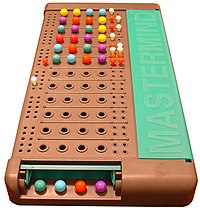
...it reminds me of that game "Mastermind" where you guess the 4 coloured pin combo...

Tuesday, 21 February 2012

*Sparkle* A Spelling Game

A new spelling game I have been playing with the Elementary School classes I have taught in over the past few weeks.


Great way to practice weekly spelling words and have a fun, interactive game.

1. Students stand in a circle (not neccessary, could also do standing at their desks)
2. Teacher says the word (choose from spelling list)
3. First student says first letter, next student says next letter and so on.
4. After last letter is said, the next student says "Sparkle"
5. If a student says the wrong letter or doesn't say Sparkle at the end, they sit down and are out for this round.
6. Keep going until you have one student left.

For Example:
Teacher: trust
Student 1: "t"
Student 2: "r"
Student 3: "e"
Teacher:  Sorry (student sits)
Student 3: "u"
Student 4: "s"
Student 5: "t"
Student 6: "Sparkle"

and so on

Give it a try and let me know how it goes.

If you have any other spelling game ideas, please feel free to comment below and share.

Wednesday, 25 January 2012

Spelling Detectives

Another activity to use in class:

1.) Write the weekly spelling words in random order on the chalk board and tell the class to study the
words carefully for one minute.
2.) Tell the students to put their heads down - no looking!
3.) Erase one of the words and rewrite it - this time spell it wrong.
4.) As the class has their heads down say, "Oh my, something looks wrong - all spelling detectives raise
your heads and see if you can tell me what word is not spelled correctly."
5.) After 30 seconds, call on a volunteer to tell you the word and how it should be spelled. If the child
answers correctly reward the class a point. If the child does not answer correctly, identify the word and
give yourself 1 point.
6.) Repeat Steps.