Opinions expressed on this blog are my own and do not represent any other organization or affiliation I may have.
Showing posts with label teaching. Show all posts

Saturday, 19 March 2016

BCECTA newest newsletter available now!

I am the president of an amazing group of teachers that support early career teachers and on-call teachers. We are the newest PSA and part of the BCTF.

Check out the latest newsletter from the BC Teachers' Federation's [BCTF] Provincial Specialist Association [PSA] the B.C. Early Career Teachers' Association [BCECTA]
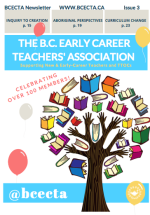
Screen shot 2016-03-08 at 10.06.51 AM

See all issues here

Wednesday, 7 January 2015

Majority of U.S. public school students are in poverty


For the first time in at least 50 years, a majority of U.S. public school students come from low-income families, according to a new analysis of 2013 federal data, a statistic that has profound implications for the nation.
The Southern Education Foundation reports that 51 percent of students in pre-kindergarten through 12th grade in the 2012-2013 school year were eligible for the federal program that provides free and reduced-price lunches. The lunch program is a rough proxy for poverty, but the explosion in the number of needy children in the nation’s public classrooms is a recent phenomenon that has been gaining attention among educators, public officials and researchers.
“We’ve all known this was the trend, that we would get to a majority, but it’s here sooner rather than later,” said Michael A. Rebell of the Campaign for Educational Equity at Teachers College at Columbia University, noting that the poverty rate has been increasing even as the economy has improved. “A lot of people at the top are doing much better, but the people at the bottom are not doing better at all. Those are the people who have the most children and send their children to public school.”
The shift to a majority-poor student population means that in public schools, a growing number of children start kindergarten already trailing their more privileged peers and rarely, if ever, catch up. They are less likely to have support at home, are less frequently exposed to enriching activities outside of school, and are more likely to drop out and never attend college.
It also means that education policy, funding decisions and classroom instruction must adapt to the needy children who arrive at school each day.
“When they first come in my door in the morning, the first thing I do is an inventory of immediate needs: Did you eat? Are you clean? A big part of my job is making them feel safe,” said Sonya Romero-Smith, a veteran teacher at Lew Wallace Elementary School in Albuquerque. Fourteen of her 18 kindergartners are eligible for free lunches.
She helps them clean up with bathroom wipes and toothbrushes, and she stocks a drawer with clean socks, underwear, pants and shoes.
Romero-Smith, 40, who has been a teacher for 19 years, became a foster mother in November to two girls, sisters who attend her school. They had been homeless, their father living on the streets and their mother in jail, she said. When she brought the girls home, she was shocked by the disarray of their young lives.

Thursday, 19 June 2014

BCFED & BCTF Rally for #BCED tonight at Canada Place

What an amazing rally. There was a Maple Ridge teacher who spoke, a Vancouver grade 12 students, BCTF President Jim Iker, Jim Sinclair from BCFED, Ontario Teachers' president, CLC President Hassan Yussaff, leader of the NDP John Horgan, and many other wonderful speakers.

What was inspiring to me

  • Passionate speakers
  • Student who pointed out she could vote in 6 months and Christy Clark had lost her vote
  • Ontario Teachers support "Your fight is our fight"
  • Reminders of the importance of what we are standing up for
  • Sinclair - passionate as always
  • hearing enthusiasm in Jim Iker's usually calm voice
  • Listening to NDP leader supporting education
  • seeing past NDP leader Glen Clark who I met as a young youth advocate
  • reading creative and clever signs
  • seeing colleagues 
  • the music, one group is made up of local band teachers (and a drama teacher) who I have worked with 
  • it was massive, so many people!


I tweeted more and posted some on my facebook.

Friday, 6 June 2014

Connectivity and School Culture


Came across another great article I wanted to share, How Transparency Can Transform School Culture.

It talks about how leadership in a school can create connectivity and a culture of sharing of both successes and struggles. With social media, sharing becomes easier and more

“The culture offline or online has to say we care about being open minded to the rest of our learning community whether that’s local or global.”
Many educators have found connecting through social media and other online platforms is valuable for sharing resources and inspire one another. But some teachers are still wary of social media after a few high-profile incidents of teachers being accused of wrong-doing on the web, Mazza said. “Once teachers understand that the leadership is taking a risk, then they feel a lot more comfortable doing so,” he said
I encourage you to check out the article as it has some great points surrounding transparency and school culture, along with social media and how the connectivity is growing from it.

Getty

“When you’re using digital tools and other social media it’s like you’re yelling out the front door of your school because you are so proud of something.”

Read more here

Monday, 2 June 2014

Prizes for all? Why aren't rewards working?


I frequently discuss this issue with teachers, in particular, new teachers and TTOCs. What is acceptable for  'rewards' and when should they be used?

As a parent, I do not give my daughter allowance or rewards for doing what she is supposed to do... make her bed, take dishes to the sink, keep her room clean, do her homework... those are things she needs to do. Now, if she does additional chores or helps out above her own responsibilities, there are sometimes thank-yous such as a verbal thanks, an ice cream, a mall date... but I digress...

When do rewards work and how do rewards work, if at all? I found this article that examines the use of rewards and why they do not work.


“Everybody has won, and all must have prizes.”
Lewis Carroll’s Dodo, Alice in Wonderland


“When the new system was introduced, one of my pupils shouted: ‘You get points just for showing up! What does that teach us?’ Looking later at the stats, I noticed that the top five reward earners were the worst behaved students in the entire school. Prizes were simply being used as a way of getting kids to do what they should be doing anyway, rather than to reward students for going the extra mile. The attitude was ‘oh well, I’ll get more later anyway, I can’t be bothered to answer these questions, so I won’t’. That’s when it struck me: giving out unmerited rewards all the time actually legitimised their poor behaviour.”
Image

A couple of stories from economic research can enlighten us as to why incentives backfire:
‘When people were given a small stipend for donating blood rather than simply praised for their altruism, they actually donated less blood. The stipend turned a noble act of charity into a painful way to make money, and it simply wasn’t worth it.’
‘Nursery schools started fining parents who turned up late to pick up their children at 4pm. The result was striking: the number of late pick-ups more than doubled.’
 There are two main types of incentives: economic, and social or moral. The fine and the stipend backfired because they substituted an economic incentive for a moral incentive. 
Image
Daniel Pink, author of 'Drive: the surprising truth about what motivates us' says what really motivates us is mastery, purpose and autonomy. Deci‘s psychological research suggests competence, relatedness and autonomy are the key ingredients, although to my knowledge these are nowhere in the research split out and measured for their relative importance.
Image
I’d build on this and suggest that pupils develop their intrinsic motivation through three nutrients: mastery, responsibility and relationships. I think responsibility is a more foundational nutrient for young primary and secondary school pupils than autonomy; that you can’t be truly autonomous until you’ve achieved responsibility for your choices and their consequences.

Sunday, 18 May 2014

Something to be bothered about with #BCed

I apologize if my outcry against the deterioration of public education bothers you but I think there are much larger issues to be bothered by with the way this Provincial government is treating public education!

I shared this as a facebook status, and I wanted to share it here as well:
Teachers fight for students everyday. Fight for smaller classes, more support, specialist teachers and a safe place to learn and grow. My union fights for me. Fights for improved salary, benefits and better working conditions. Don't get it confused... Teachers always 'do more with less' so just because we ask for a fair wage to catch up with teachers across Canada (many with lower cost of living) doesn't mean we are greedy. We care about your kids, but have families of our own too. Funding needs to go into education, for better working conditions for teachers, which is better learning conditions for kids. Thank-you to everyone who supports public education. We will keep fighting until this government makes it a priority!
As the struggle continues in British Columbia for public education to become a priority for the BC Liberal government, I find myself constantly having to defend my job, my union, and my students. For some reason, there is this divide... just because teachers want better working conditions including salary, benefits, prep time and smaller classes, they are somehow greedy and not passionate about teaching. Many somehow believe that improving things for teachers doesn't positively impact students.

I can't even count the number of times, in the past two weeks, I have been asked, "Why don't you choose a different career?" or "Well, why do you keep teaching then?" or "Have you thought about moving somewhere else to try teaching or moving to the private sector?" Like that is the answer?

I am a teacher because I care about education and kids... but that doesn't mean I don't also care about my own well being and my family's security. Like any person, in any job, there is a balance of wanting what is best for your clients, colleagues, business, whatever the case may be... as well as your own family and personal life too. I am passionate about education and that means I stick with it, through thick and thin, always trying to improve it for my students as learners and for myself and my colleagues as teachers.

About me...It has been a roller coaster ride... I graduated from university and was hired that summer to start in September as a Teacher-Teaching-On-Call [TTOC] in the district I still call home. After three years of slow work and struggling to make ends meet as a TTOC, I obtained my first part time temporary contract. It was outside my subject area, but I took it because contracts were hard to come by. After that, I had a temporary contract, of some sort, for a few months each year until, in year seven, I finally "rolled over" into a continuing part-time contract. This meant, although 'owed a job' I would be laid off each year until I obtained enough seniority to find a secure position, a classroom and school to call home.

Last year I was laid off and out of 480 or so teachers, I was right in the middle. I was recalled to a part-time job, outside my subject area, the day before school started, and on-call the rest of the days. This year, of our 632 teachers laid off, I am in the bottom 100. Because I am part time, many full time teachers have jumped ahead of me on the lay off and recall list. With a cut off point of 8 years and 4 months, many teachers who have not been laid of fin several years are laid off this year. I have only 2 years and 6 months seniority because much of my on-call teaching time is not included in calculation so I knew I would be laid off this year, however,  I didn't expect to be so low down the list. I don't expect to be recalled in September, if at all next year. This is one of many difficult cuts my district has had to make because of lack of funding from the Provincial government!

I don't mean to sound greedy, or selfish, [why do teachers always apologize when speaking out against injustices?] but as I enter my ninth year teaching, I wonder when I will escape this tumultuous procedure? Where else does nearly a decade of service lead to facing this much uncertainty? If I continued to work just my part-time, 2 day a week contract and the lay-off level stayed as it is this year forever, it would take me almost 15 MORE years to get above lay-off line.

Depressing as that is for me personally, it is not as depressing as losing all our teacher-librarians next year, among other major cuts. My district is not alone in facing these difficult decisions, across B.C. school boards are struggling to balance budgets as the provincial government continues to download costs. B.C. invests $1000 less per student compared to the national average which, if corrected, would resolve most of the cuts school districts are being forced to make. These cuts are devastating and will change public education forever. I fear, once cut, these positions, services and programs will never return and my daughter and her future children, will not be given the opportunities they deserve in school.

It isn't just about me and my family, although that is very important to me, it is about everyone's family and future. Although cliche, it is true, these kids are our future... the government talks about a 'strong economy' but is squashing our young future decision makers' opportunities. Our future nurses, teachers, plumbers, tradespeople, parents, bankers, doctors, cooks, lawyers.... losing important support in school.

It frustrates me that there is no money for classrooms, but our premiere can spend frivolously. It isn't about there being no money, it is about the allocation of money and the priorities this government has. Clearly education is not one of them.

It upsets me that we are bullied and bribed in the public instead of respected at the bargaining table. There is a fair deal to be made, but the media parade won't help us get there.

Teachers elsewhere in this country are negotiating and being recognized as important figures in children's lives. Why can't B.C. see the same? An investment in education now, will pay off in the future.

This isn't about being adversarial, this is about coming to the table... the government and the BCTF... and discussing, proposing, negotiating. Teachers working conditions are students learning conditions and both need to be protected.

Education is worth the investment. Quality education should not be reserved for the rich and elite. Everyone deserves the opportunity to learn and grow in a safe and nurturing environment.

So, I apologize if my outcry against the deterioration of public education bothers you, but I think it should bother you more that this government is treating teachers and students this way. Everyone has a right to quality education and as a teacher and a parent, I will keep fighting for public education and the educators who work hard every day to teach our children. I won't give up on their future and neither should you!


Wednesday, 30 April 2014

Poetry is still important...


High school poetry suffers from an image problem. Think of Dead Poet’s Society's scenes of red-cheeked lads standing on desks and reciting verse, or of dowdy Dickinson imitators mooning on park benches, filling up journals with noxious chapbook fodder. There’s also the tired lessons about iambic pentameter and teachers wringing interpretations from cryptic stanzas, their students bewildered and chuckling. Reading poetry is impractical, even frivolous. High school poets are antisocial and effete.

... poetry enables teachers to teach their students how to write, read, and understand any text. Poetry can give students a healthy outlet for surging emotions. Reading original poetry aloud in class can foster trust and empathy in the classroom community, while also emphasizing speaking and listening skills that are often neglected in high school literature classes. 

It is true. Poetry is often the unit my students least look forward to because it is thought of negatively. I like to open the unit with a modern song loaded with metaphors and other literary devices. This shows them poetry is still relevant and, if I am being honest, pretty awesome!

Read more of this article at the source (link below)

Source

Friday, 11 April 2014

Battery life of a teacher...


Who can relate to this? I know I sure can... it is so important to recharge - what are you doing this weekend to recharge?

Teacher wellness is so important - remember to take 'you' time.

This weekend I am going with friends to an escape room (45 minutes to try to "escape" a themed room by solving puzzles) I am also going to my daughter's field hockey game and maybe a movie... down time after a busy week. Recharging my "battery" for next week!

Sunday, 25 August 2013

Desk Decorating

Cute way decorate desk. Cover with construction paper and add trim.
I love this desk! As a TTOC, I think I crave the "my own classroom" ideas. Although I am now a "continuing teacher" I am only a .4 contract (so I am part time and most likely job share a class) but I love the idea of having my own full time class and decorating my desk up like this.... it's so cute!

http://pinterest.com/pin/61431982390099308/