Opinions expressed on this blog are my own and do not represent any other organization or affiliation I may have.
Showing posts with label questions. Show all posts

Thursday, 15 January 2015

11 Questions that will make your child happier

I love these as a mom and a teacher they are great reminders on how to frame questions and conversations with children. These were taken from this article.

1. What was your favorite part of today?
This is a good question to ask at bedtime, to help your child feel content and happy before sleep. It also instills a habit of focusing on the best thing that happened in any given day rather than the worst. If you make this part of your bedtime routine, it will become second nature.
2. What are you grateful for?
This is a good question for the dinner table. Every family member can take a turn saying what he or she is grateful for that day. There is a strong correlation betweenhappiness and gratitude, so this one is very powerful.
3. What are you going to do about that?
When a child comes to you with a problem, ask this question in a warm and curious tone. Don't just jump in and solve their problem; how does that help them in the long run? At least give them a chance to work it out on their own, and give them the gift of your confidence in them, which is evident by this question that implies that they can think of solutions to their own issues. If your child says "I don't know," you can say, "I am not sure either, let's try to figure it out together." Happy people are people who think of problems as surmountable, and think of themselves as effective problem solvers.
4. How did that make you feel?
At the risk of sounding shrink-y, an essential part of happiness is being able to notice and express your own emotions. If you can verbalize what you're feeling, you can make sense of it, you can process it, and you can obtain support from others. This is a great question to ask when your child comes to you with something "bad" that happened, instead of either dismissing it ("that wasn't that bad") or fixing it ("let mommy get you some ice!"). It trains your child to be aware of his feelings, and to use that information effectively.
5. What do you think he/she feels?
In any situation, you can cultivate empathy by asking your child to wonder about what someone else feels. Empathy will make your child a happier person; he or she will have stronger interpersonal relationships, feel better about himself for thinking of (and then, often, helping) others, and derive more meaning from life.
6.  How can we look on the bright side?
In any situation, you can teach your child that there are positives. With preteens or teenagers, this question may be way too corny, but little kids will like it. You can also teach them the expression "making lemonade out of a lemon" and ask them how you can make lemonade out of a bad situation, like, "You fell and hurt yourself, so that's a lemon, but you got a Tinkerbell bandaid, and that's lemonade! Now you tell Mommy one."
7. What part of that can we learn more about?
In any TV show, book, trip outside the house, basically any situation at all, there is something to learn more about. And look at you, Super Parent, you already have your smartphone at the ready!  So this time use it for teaching your child that life is full of learning opportunities.  Happy people are people who are curious and always learning.  So when you watch TV and someone says "Bonjour," you can look up pictures of France or a YouTube song sung in French. When your child realizes that this question means that you're going to whip out your phone and show them something new and special, they will ask it to you all the time. And that's how you end up looking at pictures of real estate in Nebraska with your 4-year-old. Don't ask.
8. What do you want to do on the weekend?
Research shows that anticipation of positive experiences brings more happiness than the experiences themselves. Once your child is old enough to realize that tomorrow is not today, start instilling a habit of positive anticipation of small pleasures. A child who is excited all week to get frozen yogurt on the weekend is a happy child, just as an adult who plans a vacation six months in advance is happier during those six months.
9. What can we do to help/to make someone happy?
Bringing your child along to visit a sick relative, or someone recovering from surgery, or to volunteer at a soup kitchen is a wonderful gift that you can give to your child. Your child will feel even more proud of his behavior if he is the one to think up the nice thing that can be done (e.g., baking cookies to deliver, drawing a card). Research shows that giving even releases oxytocin and endorphins, so it's like a high that your child can become addicted to. Also, involve your child in your charitable activities, as giving charity is a form of altruism that is also linked directly to happiness (and just to being a good person, which you also want for your child).
Incorporate a spirit of generosity into your child's daily life. Whenever you're out, buy something little for someone else.  When you color, make a picture for someone else. Giving things to others makes people happier than buying things for themselves, and enriches interpersonal relationships.
10. What do you want to do outside today?
Getting outside and engaging in physical activities alongside your child is a wonderful way to get him or her in the habit of not just sitting around. Exercise releases endorphins and is as effective at treating depression as SSRI's. And the most powerful way that you can teach your child about exercise is to do it yourself. Children whose mothers exercise are more likely to exercise themselves. And sunlight can also help boost mood and regulate circadian rhythms, which means better sleep for your kids, which makes everyone happier.
11. When do you feel happiest?
If you direct your children's attention to the experiences that they most enjoy, they will start to realize that they can choose to proactively increase their time spent in activities that make them feel best about themselves.  According to researcher Mihaly Csikszentmihalyi, "flow" is the state where people find an activity so enjoyable and rewarding that they become completely immersed in it, losing all sense of time and feeling completely in the moment. If your child is lucky enough to have found an activity that makes him feel a sense of "flow," it is helpful for you to point this out and allow your child enough time to attain this state. Note: for many kids this is video gaming, which is actually fine, since a great deal of research points to many psychological benefits of gaming (and anecdotally, I know many people who met their spouses while gaming, and gaming actually brings spouses closer if both participate!). The best case scenario is for your child to find a career that puts him into "flow," since then, as the saying goes, he will never "work" a day in his life.


Source: http://www.huffingtonpost.com/samantha-rodman-phd/11-questions-that-will-make-your-child-happier_b_6401788.html

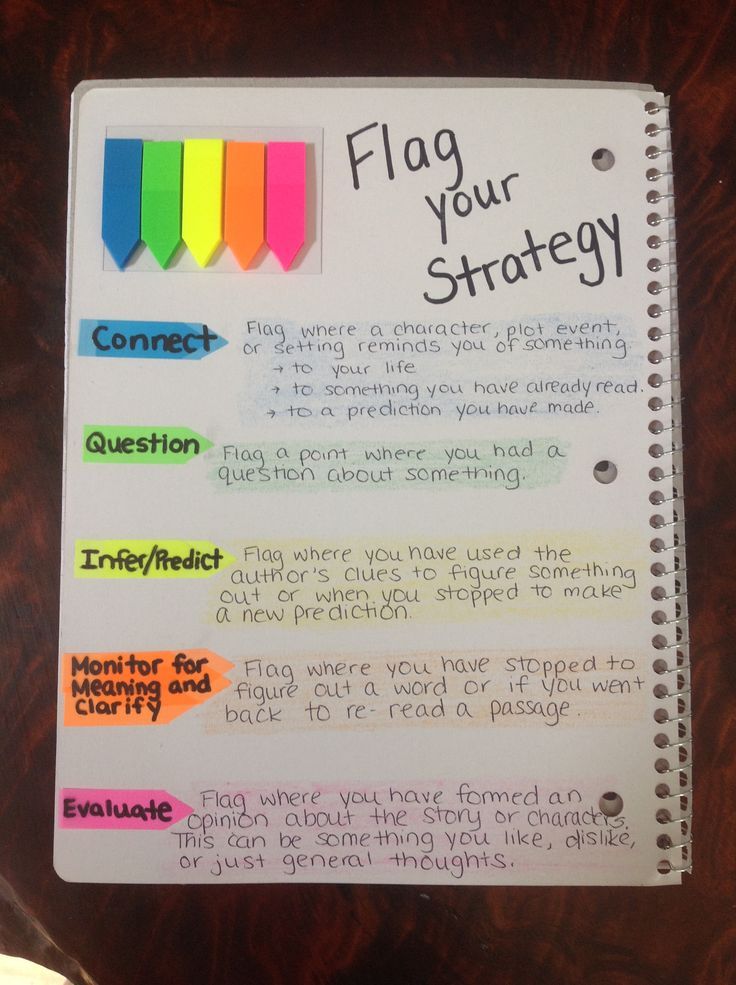
Saturday, 22 November 2014

Close Reading Strategies


Here are five features of close reading instruction that make students want and love to read.
Text Selection
Passages don’t have to dense and dry to be worth a close read. Choosing novel excerpts, articles, poems, even images or movie clips that address big ideas, even if they’re from modern sources, accomplish the same instructional objectives as reading Twain or Bronte. A bonus, using contemporary YA material means your students will likely have loads of background knowledge to apply to a cold read. 
Engaging Questions
Is our destiny malleable or fixed? Should government make decisions for us? Why do we need love? When questions invite students into discussions that have engaged humans for centuries, they captivate student interest and prompt rousing discussion.
Students Take ControlOne of the tenants of close reading, the purposeful rereading of text, allows students to take ownership. The more students read, the more they can take a leadership role in the discussion. As students read and reread, look for opportunities to step back and let students take the reigns. 
Collaboration
Far from silent reading or quiet work time, close reading lessons should be peppered with lively discussion and Aha! moments. Collaborative discussion allows students to put text evidence into practice and to share and refine their ideas. Provide time for students to work together during readings, before writing, and in discussion to make close reading a shared experience. 
Debate and Argument
Students—middle schoolers especially—love to debate. Draw the connection between crafting strong, logical arguments and winning debates and you’ll have them hooked. 

Saturday, 16 March 2013

Questioning in the classroom, Bringing Class Discussions to life

This article  looks at questioning and and how to make classrooms engaging through questioning.

 Middle E-Connections - Bring Class Discussions to Life
January 2013
Rick Wormeli

"Beuller? Beuller?"

Look in on class discussions today and what you'll see (I hope) is a far cry from the classroom of gaping-mouthed, drooling, blank-faced students in the John Hughes 1986 film Ferris Beuller's Day Off.

One great way to get students to think critically and move information into long-term memory is through dynamic class discussions. However, ensuring these discussions are effective requires clear principles and strategies.

Whoever asks the questions does the learning. If I ask a student about a topic and listen to his answer, especially if I'm interested in the topic and the student, I'm learning a lot, but the rest of the class is sitting passively. Do you see something wrong with this picture? I am the teacher; I already know the material. My goal is for students to learn it. Students, therefore, need to be asking the questions.

Students learn the most when they ask the questions themselves. To make this happen, teachers have to make question-asking compelling and habitual. As often as possible, ask students to brainstorm questions, queries, and investigate starting points for as many topics as time allows to get them in the habit.
  • Create 10 questions to which "colloquialism" is a good answer.
  • What are all the possible things we'd want to know about cuneiform writing?
  • What do you wonder about your future?
  • What questions might a visitor from another planet ask after observing our election process?
  • Pretend you're a radicand (the number under the radical sign in a square root). What would concern you as this math algorithm progresses?
  • Create all the "Why … ?" questions you can about light and the way it behaves.
  • Skim the whole chapter and list at least eight questions the chapter seems to answer.
Making question-asking compelling is another issue, however. Here, we're trying to make students so curious that they form their own questions: "Why does it do that?" "What will the effect be?" "What are the exceptions to this rule?" "Why do you believe that?" "How is this false?" "Where's my mistake?" and "What would happen if … ?"
We can create curiosity by presenting students with puzzling phenomena, surprising facts, challenges to accepted opinions, appeals to imagination, playful situations with manipulatives, connections among seemingly disparate concepts, moral dilemmas, and personal dramas when facing struggle.

Another way to involve more students in active question-asking is to get your students to ask the follow-up questions. If one student answers the initial question you pose, ask a second student to offer evidence to support or refute the first student's response; then ask a third student to critique the second student's evidence. Go back to the first student who provided the initial response and ask her to respond to what the other two students said. This creates positive anxiety in the classroom. We want students so concerned that they will be called upon to say something intelligent that they remain on their toes mentally. To be effective, we have to make a habit of this redirection so that students know it's going to happen. This keeps the entire class thinking of answers and questions to ask.

Another tip for keeping the whole class engaged is to always pose questions to the entire class before calling on a specific student to respond. This invites percolation, which builds those neural pathways. Wait time is important as well. Research shows that waiting 10 seconds or more before calling on a student to respond leads to more depth, thinking, and investment in the conversation. It takes practice, but it's worth promoting this expectant silence so that students know you're counting on them to come up with a quality response.

This article was excerpted from the new AMLE release The Collected Writings (so far) of Rick Wormeli: Crazy Good Stuff I've Learned about Teaching Along the Way. For more great teaching advice from this beloved speaker and author, pick up the book in the AMLE Store.

Monday, 25 February 2013

Riddles...

As a TTOC you want to have a "Bag of Tricks" and riddles are certainly one way to fill time, stand out, entertain, get students thinking and help with transitions.... 

5 minute mysteries are also fun and work a bit better with older students.

Riddles (Answers are at the bottom of the page)
From a Packet for Substitute Teachers

  1. What goes up and down stairs without moving?
  2. Give it food and it will live; give it water and it will die.
  3. What can you catch but not throw?
  4. I run, yet I have no legs. What am I?
  5. Take one out and scratch my head, I am now black but once was red.
  6. Remove the outside, cook the inside, eat the outside, throw away the inside.
  7. What goes around the world and stays in a corner?
  8. What gets wetter the more it dries?
  9. The more there is, the less you see.
  10. They come at night without being called and are lost in the day without being stolen.
  11. What kind of room has no windows or doors?
  12. I have holes on the top and bottom. I have holes on my left and on my right. And I have holes in the middle, yet I still hold water. What am I?
  13. I look at you, you look at me, I raise my right, you raise your left. What is this object?
  14. It has no top or bottom but it can hold flesh, bones, and blood all at the same time. What is this object?
  15. The more you take the more you leave behind.
  16. Light as a feather, there is nothing in it; the strongest man can't hold it for much more than a minute.
  17. As I walked along the path I saw something with four fingers and one thumb, but it was not flesh, fish, bone, or fowl.
  18. What can run but never walks, has a mouth but never talks, has a head but never weeps, has a bed but never sleeps?
  19. I went into the woods and got it, I sat down to seek it, I brought it home with me because I couldn't find it.
  20. What can fill a room but takes up no space?
  21. It is weightless, you can see it, and if you put it in a barrel it will make the barrel lighter?
  22. No sooner spoken than broken. What is it?
  23. Only two backbones and thousands of ribs.
  24. Four jolly men sat down to play, And played all night till the break of day. They played for cash and not for fun, With a separate score for every one. When it came time to square accounts, They all had made quite fair amounts. Now, not one has lost and all have gained, Tell me, now, this can you explain?
  25. Jack and Jill are lying on the floor inside the house, dead. They died from lack of water. There is shattered glass next to them. How did they die?
  26. Why don't lobsters share?
  27. A barrel of water weighs 20 pounds. What must you add to it to make it weigh 12 pounds?
  28. Big as a biscuit, deep as a cup, Even a river can't fill it up. What is it?
  29. Clara Clatter was born on December 27th, yet her birthday is always in the summer. How is this possible?
  30. He has married many women but has never married. Who is he?
  31. If a rooster laid a brown egg and a white egg, what kind of chicks would hatch?
  32. If you have it, you want to share it. If you share it, you don't have it. What is it?
  33. You can't keep this until you have given it.
  34. Take off my skin, I won't cry, but you will. What am I?
  35. What book was once owned by only the wealthy, but now everyone can have it? You can't buy it in a bookstore or take it from the library.
  36. What can go up and come down without moving?
  37. What do you fill with empty hands?
  38. What do you serve that you can't eat?
  39. What do you throw out when you want to use it but take in when you don't want to use it?
  40. What goes up and never comes down?
  41. What has a foot on each side and one in the middle?
  42. What has to be broken before it can be used?
  43. What kind of coat can be put on only when wet?
  44. What question can you never answer "yes" to?
  45. What's the greatest worldwide use of cowhide?
  46. Which is correct to say, "The yolk of the egg are white?" or "The yolk of the egg is white?"
  47. You answer me, although I never ask you questions. What am I?

Answers
  1. Carpet
  2. Fire
  3. A cold
  4. A nose
  5. A match
  6. Corn
  7. A stamp
  8. Towel
  9. Darkness
  10. Stars
  11. A mushroom
  12. A sponge
  13. A mirror
  14. A ring
  15. Footsteps
  16. Breath
  17. Glove
  18. River
  19. Splinter
  20. Light
  21. A hole
  22. Silence
  23. Railroad
  24. Four men in a dance band
  25. Jack and Jill are goldfish.
  26. They're shellfish.
  27. Holes
  28. A kitchen strainer
  29. She lives in the Southern Hemisphere.
  30. A priest
  31. None. Roosters don't lay eggs.
  32. A secret
  33. A promise
  34. An onion
  35. A telephone book
  36. The temperature
  37. Gloves
  38. A tennis ball
  39. An anchor
  40. Your age
  41. A yardstick
  42. An egg
  43. A coat of paint
  44. "Are you asleep?"
  45. To hold cows together
  46. Neither, the yolks are yellow.
  47. A telephone  

Monday, 10 December 2012

How do we teach young women positive self-esteem?

My daughter's school had a Saleema Moon presentation for parents [and then for the kids.] My husband and I disagreed on what was appropriate for a 9 year old in relation to sexual education, but agreed that the presentation would be a positive educational experience for our daughter.

I have been pretty open and matter-of-fact with my daughter about puberty and how babies grow etc. We have a very open relationship, where (at least for now) she seems to talk to me about everything. After the presentation she admited she learned some things, didn't understand some things but overall was glad she went. The presenter, Dr. Brandy Wiebe, had told us at the parents session that if a child was not ready to learn something, it would just go in one ear and out the other, so I let my daughter know that if there were things she didn't understand she could always come to me to ask questions now or later. I hope that openess continues as she gets older. I think every child needs a trusted adult to talk to about "life" but am not so niave to believe it can always be the parent.

I found the Saleema Moon talk to be very informative and presented in a way that was very appropriate for the age group(s). I think young girls and boys should understand these things before they experience them so they aren't scared, or surprised. As Dr. Brandy Wiebe said to our children, "How many of you are grossed out ? That's ok, this is an adult activity so luckily you don't have to worry about it for a long time, phew!"

As a parent, I am glad my daughter is getting this information early on so she has it "in her back pocket" for if and when she needs it in the future.

As an educator, I was interested in what topics were covered from each age group (which was provided in a hand out) and how they address more complex and mature topics with older students, in particular, decision-making as a pre-teen and teenager.

Dr. Brandy Wiebe spoke with me one-on-one and said that often the decisions young people make with regards to sex are because of others, not themselves. She said, if students can learn to value themselves and make decisions FOR themselves, that is a good start. This resonated with me...

I am very interested in how to help young girls in particular, develop self-esteem and how to promote positivity for young women who too often make decisions based on other's opinions, wants, needs and not their own,. How do we teach young women to value themselves?

Here is a story I heard:

A well-known speaker started off his seminar holding up a $20.00 bill. In the room of 200, he asked, “Who would like this $20 bill?” Hands started going up. He said, “I am going to give this $20 to one of you but first, let me do this.”
He proceeded to crumple up …the $20 dollar bill. He then asked, “Who still wants it…?” Still the hands …..were up in the air. “Well,” he replied, “What if I do this?” And he dropped it on the ground and started to grind it into the floor with his shoe.
He picked it up, now crumpled and dirty. “Now, who still wants it?” Still the hands went into the air. “My friends, we have all learned a very valuable lesson. No matter what I did to the money, you still wanted it because it did not decrease in value. It was still worth $20. Many times in our lives, we are dropped, crumpled, and ground into the dirt by the decisions we make and the circumstances that come our way.
We may feel as though we are worthless. But no matter what has happened or what will happen, you will never lose your value. Dirty or clean, crumpled or finely creased, you are still priceless to those who DO LOVE you.
The worth of our lives comes not in what we do, who we know or a price tag but by WHO WE ARE. You are special-Don’t EVER forget it!!
I wonder if this example would work with my own students? At what age can they make that connection? I wonder...

Now, my focus on young women's need for strong self-esteem does not mean that young boys are any less important in this equation, however, having been a young women that was bullied and often struggled with low self-esteem, I have a real desire to help young girls become strong women! I had positive teachers in my life and hope to be that for even one of my students!

Monday, 28 May 2012

Questions Students Ask Teachers-On-Call

I read a great post over at Sub Hub about questions TTOCs get from students. The questions are the same as the ones I hear day to day but my answers are a little bit different....
No matter if I am subbing for an afternoon, a whole day, or an extended stay, not a day goes by that I don't hear these questions. I have gotten to where I have some fairly standard responses to them.
1. Where is Ms. So-and-So?
I usually say, "I am not sure, but they should be back tomorrow (or whenever I am scheduled until, if I don't know I say "soon") Sometimes it is fun to use a silly response. Here are some I read on another blog:
She's visiting Candyland today; she's spending the whole day doing nothing but eating cotton candy; she's auditioning for American Idol... anything crazily outlandish, and the sillier the better. Sometimes the students even get a kick out of trying to figure out if I am kidding or not.
2. What time is recess/lunch/specials?Usually I tell them how long, but I like this response:
It doesn't seem to matter whether it's kindergarten or fifth grade, someone always asks about times for standard parts of the schedule. In that case, I always have the same response. "It's the same time it's been all year." I know, it's sarcastic. But I always follow it up with a correct response.
3. Is this for a grade?I always tell them that their teacher asked me to collect it, so I would guess it is for marks. This is because if it isn't for marks, they tend to not put forth any effort.

4. Can we use markers? (or some toy, game, book)I ALWAYS say, "what is the usual rule?" Generally I try to stick to the regular classroom rules, if they aren't sure if they are usually allowed, I say no. Here is the subhub's response to this question:
Oh my, how those elementary kiddos love their markers! It makes them positively giddy if you say yes to that question. If it's something I know is a graded assignment, I ask what the normal rule is in the classroom. If it's something I know is enrichment or extra practice, I might say yes just to make them happy.
5. Can we work in partners/groups?
Depending on the class, I usually say yes, but that if it becomes too loud/off task/disruptive, the privilege is lost.
I also hear this a lot:

Ms. So-and-so does this....
I often look around and ask if I look like Ms. so-and-so... with younger children I usually start my day letting them know that while I love to learn how they do (this and that) in their classroom, that I go to a lot of different classrooms and I may do things a little bit different, just for today. Calendar time tends to be the thing most Primary classes need to be "exactly the same" every day, every teacher, no matter what.

I think it is important children learn to adapt to new faces and routines, but also to keep them feeling safe and comfortable. I try to have a helpful student run the show. Luckily, most primary classes have a "special friend" of the day who gets to run calendar and they usually know EXACTLY how it is done!

What questions do you hear often? How do you respond to those questions or any of these questions?