Opinions expressed on this blog are my own and do not represent any other organization or affiliation I may have.
Showing posts with label self regulation. Show all posts

Thursday, 9 April 2020

Self Regulation Tools

I am trying to schedule a weekly post each Thursday on Self Regulation Tools that you may find beneficial to try out with students who are struggling with anxiety, hyper activity, distraction, or feeling overwhelmed or anxious. Here are a few tools for this week....

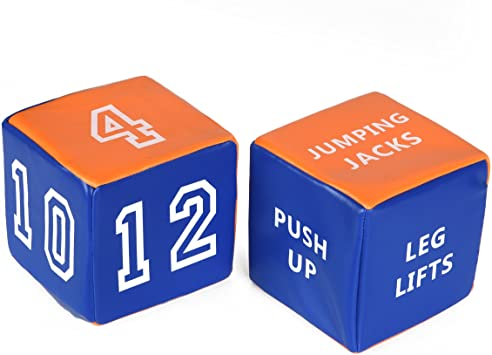
 Image result for fitness dice

Fitness Dice

These are great for movement breaks and can be used in the hallway, open area of the classroom or outside.


Find It

A great way to focus your mind or help a child who is feeling emotional or overwhelmed.


Zentangle

Meditation Drawings that help focus and calm individuals


Glitter jars

Easy made glitter jars are great for calming individuals who may be overwhelmed, emotional or struggling to manage their hyperactivity. It is great for meditation and can also be used for a timer (waiting for all the glitter to stop moving)

Thursday, 2 April 2020

Self Regulation Sensory Tools


Self Regulation Tools have been popular for a long time but more and more "zen dens" and "sensory spaces" have become common in schools and classrooms. Last Thursday I started a weekly post on self regulation tools to share.

Here are a few cool tools....


SENSORY ITEMS:

Weighted stuffed animals - https://beezeeart.com/blogs/beezeeartblog/all-about-weighted-stuffed-animals  (includes sewing instructions to make your own)


Here is something you can make at home: Kinestic sand recipe - https://www.thoughtco.com/kinetic-sand-recipe-604167


ROUTINES:

Strategies for kids and teens to help build self regulation skills, including fun and interactive games, books, mindfulness, calming strategies, and lessons. Teaching these skills for self-regulation and self-control can help students become more successful and gives them the tools they need. #selfregulation #selfcontrol #pathway2success


As far as body breaks and movement - here is a resource with daily activities:
LIGHTING:


JOURNALS

Thursday, 26 March 2020

Self Regulation Tools

Self-regulation is a critical skill for people of all ages. It is the ability that helps us to control our behaviors to make good decisions for the long-term, rather than just doing what we want in the moment. It’s also the skill that allows us to manage our emotions when we’re feeling angry, disappointed, or worried. These can be difficult for adults, but are significantly more challenging for children and young adults, whose brains are still growing and developing.

Over the next few Thursdays, I will share some self regulation tools and activities that you may enjoy trying out. Some tools can be expensive, so talk to your principal about budget. Others you can find or make on your own (yay!) 


Foot Rollers

Purpose: *Great for active sitting *Helps to relieve excess energy, stress, and anxiety
How it is used: *placed on floor under a chair so the child can put their feet on it
Where and when: *anytime the children are sitting on a chair and need to be moving

fidget toy
Fidget Tools

Purpose: *Great for hand movement *Helps relieve energy and keep focus *Helps release stress, anxiety *minimize hyperactive movements
How it is used: *hold, fiddle, move and play
Where and when" *Anytime children are fidgety or need something to calm them


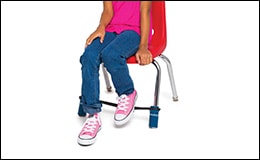
Chair Bouncy Bands

Purpose: *Great for active sitting *Helps to relieve excess energy, stress, and anxiety
How it is used: *placed on a chair so the child can put their feet on it
Where and when: *anytime the children are sitting on a chair and need to be moving

Image result for tangles

Tangles

Purpose: *fidget tool *focus and relaxation *tactile
How it is used: *children twist these to make new shapes *can be used with one hand or two
Where and when: *classroom at any time as needed by the child

Here are some more resources: https://harkla.co/blogs/special-needs/sensory-tools-school

Next week I will share some more on deep pressure sensory tools that can benefit some kids.

Wednesday, 4 June 2014

Activity Boxes

Came across this blog spot about activity boxes that can be used similar to centers, or as activities for students who need something different to help them with self-regulation. It can help with classroom management.

The objective is to redirect the negative behavior before it escalates.  I have used activity boxes with students that could become aggressive, and violent not only to themselves but also toward other individuals. It also is helpful for children that may not fully understand why they are behaving inappropriately.

Setting up activity boxes is simple.  Sometimes the simplest idea can be the one thing that helps you connect with a student!

There are a few guidelines I like to follow when setting up activity boxes for individual students for the first time.

1.  Include the student in the process.   This is important because the box is intended to help that student re-direct their negative behaviors.  It isn't going to have the degree of success if the student isn't engaged in the materials included in it.  

2. The container should be the size of a shoe box.  My first activity boxes were actual shoe boxes.  I love the Nike shoe boxes that have the flip flap lid. I would go to the Mall and ask for the empty boxes.   Students can pick their box, and help decorate it.  Shoe boxes are compact, and will stack easily in a storage closet.

3.  The contents of the activity box should have an educational value.   Using activity boxes is not intended for a student to get out of doing work, or to play after disrupting class. This is a tool to use to defuse negative (escalating) behaviors.

4.  Go over the ground rules for using the activity boxes.  This would include proper way to use and take care of the materials in the box, appropriate time to use them, etc.  Remember to focus on the positive as much as possible!

Check out photos and examples of activity boxes at - SOURCE

Sunday, 13 April 2014

How to raise happy kids, according to science

It may seem dated, but science shows family dinners are still key to happier kids.
Eating dinner as a family, though dated, leads to happier kids.

Sometimes it's hard to balance what's best for children with what makes them happy — but the two don't have to be mutually exclusive. Happier kids are more likely to turn into successful, accomplished adults.
Science shows us some ways to raise happy kids..


Here are the ten steps:
1. Get happy yourself
2. Teach them to build relationships 
3. Expect effort, not perfection
4. Teach optimism5. Teach emotional intelligence6. Form happiness habits 
7. 
Teach self-discipline
8. 
More playtime 
9. 
Rig their environment for happiness 
10. 
Eat dinner together

Source: http://theweek.com/article/index/259364/how-to-raise-happy-kids-according-to-science

Saturday, 18 January 2014

Mindfulness and SEL improving student achievement


177537564
 

Many teachers in Coquitlam have had 'MindUp' training and having been a TTOC in classes that use this mindfulness in class, I can say that it can be very beneficial. A colleague shared this article and I wanted to share a piece of it and the link to the full article for further reading if you are interested.
Schools across the country are beginning to use mindfulness as part of an effort to address the social and emotional needs of children, improving student achievement in the process.
“Before we can teach a kid how to academically excel in school, we need to teach him how to have stillness, pay attention, stay on task, regulate, make good choices,” said Larochette. “We tell kids be quiet, calm yourself down, be still. We tell them all these things they need in the classroom, but we’re not teaching them how to do that.”
It makes sense doesn't it? Less time managing behaviour as students learn to self regulate and use skills to help them learn.

READ MORE AT Source

Monday, 2 December 2013

Self Regulation Techniques featured in CBC article.


When I teach as a TTOC in different classes, I notice a variety of strategies used for DPA (Daily Physical Activity) and also Self Regulation. This article looks a bit at both and I love some of the ideas teachers are using in their classrooms.

I have tried some of the ideas like childrens yoga cards to go to use on the quiet carpet to stretch out, or a bell that signals "leaping lizards" or some other energetic exercise.

One school has "pole to pole" runs where students can go run from one end of the school to the other when they need a break. Another class I was in had regular "brain breaks" with choices of activities such as chair aerobics.

At Cindrich elementary school in Surrey, B.C., 10-year-old boys are putting themselves to bed earlier, an enthusiastic girl in Grade 6 takes herself for a run when she’s feeling hyper, and a diminutive boy who is still learning English tells his teacher he will do better work if he sits on a special cushion. 
It is all part of self-regulation, a philosophy of education that is moving into public schools in British Columbia.
Self-regulation ultimately hands the job of taking charge of their learning and their behaviour back to the kids. Teachers look for what is stressing a child and making them unable to  pay attention, lethargic, or hyper sometimes to the point where they are out of control. It might be too much noise in the classroom, too little sleep or too much junk food in their lunch. Then the teachers help the child recognize what they need to do to make themselves calm and productive in class.
Stuart Shanker, a distinguished research professor of philosophy and psychology at York University, is the pied piper of self-regulation in the schools. He maintains that Canadian kids do not know what it is to feel calm any more. There is too much stimulation in their lives. 

Read the rest of the article here

Saturday, 30 March 2013

Choice Board

I love this idea. I often have early finishers, especially as a TTOC, so this is a fun way to offer choices for those students. You could create a mobile version where they choose from cards or on a small poster.

Sunday, 24 March 2013

Boggle Template

Another pintrest find: Free Boggle Template. This is great for fast-finishers, sponge, or for a TTOCs 'Bag of Tricks'

Also, see my previous post on Boggle Walls.

Tuesday, 19 February 2013

Social Emotional Learning (SEL) and why it is so imporant!


Why Social Emotional Learning (SEL) is important...

Research shows a number of benefits. One that stands out to me is that SEL improves students' positive behavior and reduces negative behavior.

It promotes young people’s academic success, health, and well-being at the same time that it prevents a variety of problems such as alcohol and drug use, violence, truancy, and bullying.

 Read more here


Friday, 15 February 2013

Self-Starters.... Daily Activities...


I remember as a student teacher, my "short practicum" classroom was in a Middle School and the first 15 minutes of the day was "advisory" or "homeroom" It was a mixed class (grades 6, 7, 8) and a time to warm-up for the day and connect with students and staff that were not in your regular classes.

Some days there was computer lab time, some days was free play, some days was focussed activities.... What I loved about the teacher I worked with was that she had riddles on the board, every day... students had a focal point to think about when they arrived and later in the day she would discuss the riddle and see if anyone got the answer.

I found this on a website and thought I'd share it as a suggestion for doing something similar in classrooms you teach in as a TTOC:
Putting a worksheet on each student's desk, or an activity on the board before school starts, will get kids off to a great morning. This also helps prevent potential behavior problems as students come into class. To make it easier, have self-starters according to the following days:
Monday - "Monday Math" (ex: put 5 math review problems on the board)
Tuesday - "Talk It Over Tuesday" (ex: write some quotes on the board for kids to edit for punctuations, grammar, etc.)
Wednesday - "Wacky Word-Wall Wednesday" (ex: put 5 of the words from the word wall in sentences, in tongue twisters, etc.)
Thursday - "Think it Through Thursday" (ex: put a thought-provoking question on the board for students to respond to in their journals)
Friday - "Fun Friday" (ex: put afun crossword, wordsearch, coloring sheet, etc. on their desk to complete "just for fun."

I really love the idea of theme days, but if you are a Teacher-Teaching-On-Call you could potentially do the same activity multiple days since you are in multiple classrooms within a week.

I find riddles, one-minute mysteries, and word games (liike Boggle) work well.

this discussion forum  has more ideas for start of day activities

Sunday, 3 February 2013

MindUp Program

I have been in numerous classrooms that practice the MindUp program and have to say, it is AMAZING! I am a huge fan of social emotional learning and it's benefits and find that this program works well in classrooms. I hope to take the training myself this year and implement some of the practices into my classroom.

I know my daughter's teacher (in grade 2) used MindUp and my daughter enjoyed it very much and still practices some of the relaxation and focus techniques on her own at home and school.

MindUP™ aspires to:
  • Develop students’ skills in focusing their attention;
  • Sharpen students’ awareness of their environment and themselves by paying attention to what they sense and feel;
  • Strengthen the positive human qualities students possess, including their capacity to understand the perspectives of others and to be empathic, helpful, and kind;
  • Increase students’ optimism and well-being;
  • Foster a cohesive, caring learning environment and thereby an optimistic classroom. 
MindUp is a classroom-based social and emotional learning program (SEL) designed to enhance self-awarness, social awareness, attention, self regulation, problem solving, pro-social behaviour (helping, sharing, and cooperating), and positive human qualities, such as happiness, optimism, and kindness. Research has shown that students who participate in SEL programs, like MindUp, enhance their overall learning potential, improve their classroom behaviour, and increase their academic success.
 
MindUp was created to help children understand the ways their minds work and how their thoughts and feelings affect their behaviour. The MindUp curriculum is informed by the latest scientific research in the fields of cognitive neuroscience, social emotional learning, and positive psychology.
Through a series of simple lessons, students learn strategies to calm their minds, focus their attention, and become more aware of themselves, others, and their environment. Each lesson also teaches students about their brain (anatomy and function), and how they can positively influence their own brain development. Along with the classroom lessons, there is a short, twice daily practice of focusing and calming their mind using listening and breathing techniques.

Monday, 10 December 2012

How do we teach young women positive self-esteem?

My daughter's school had a Saleema Moon presentation for parents [and then for the kids.] My husband and I disagreed on what was appropriate for a 9 year old in relation to sexual education, but agreed that the presentation would be a positive educational experience for our daughter.

I have been pretty open and matter-of-fact with my daughter about puberty and how babies grow etc. We have a very open relationship, where (at least for now) she seems to talk to me about everything. After the presentation she admited she learned some things, didn't understand some things but overall was glad she went. The presenter, Dr. Brandy Wiebe, had told us at the parents session that if a child was not ready to learn something, it would just go in one ear and out the other, so I let my daughter know that if there were things she didn't understand she could always come to me to ask questions now or later. I hope that openess continues as she gets older. I think every child needs a trusted adult to talk to about "life" but am not so niave to believe it can always be the parent.

I found the Saleema Moon talk to be very informative and presented in a way that was very appropriate for the age group(s). I think young girls and boys should understand these things before they experience them so they aren't scared, or surprised. As Dr. Brandy Wiebe said to our children, "How many of you are grossed out ? That's ok, this is an adult activity so luckily you don't have to worry about it for a long time, phew!"

As a parent, I am glad my daughter is getting this information early on so she has it "in her back pocket" for if and when she needs it in the future.

As an educator, I was interested in what topics were covered from each age group (which was provided in a hand out) and how they address more complex and mature topics with older students, in particular, decision-making as a pre-teen and teenager.

Dr. Brandy Wiebe spoke with me one-on-one and said that often the decisions young people make with regards to sex are because of others, not themselves. She said, if students can learn to value themselves and make decisions FOR themselves, that is a good start. This resonated with me...

I am very interested in how to help young girls in particular, develop self-esteem and how to promote positivity for young women who too often make decisions based on other's opinions, wants, needs and not their own,. How do we teach young women to value themselves?

Here is a story I heard:

A well-known speaker started off his seminar holding up a $20.00 bill. In the room of 200, he asked, “Who would like this $20 bill?” Hands started going up. He said, “I am going to give this $20 to one of you but first, let me do this.”
He proceeded to crumple up …the $20 dollar bill. He then asked, “Who still wants it…?” Still the hands …..were up in the air. “Well,” he replied, “What if I do this?” And he dropped it on the ground and started to grind it into the floor with his shoe.
He picked it up, now crumpled and dirty. “Now, who still wants it?” Still the hands went into the air. “My friends, we have all learned a very valuable lesson. No matter what I did to the money, you still wanted it because it did not decrease in value. It was still worth $20. Many times in our lives, we are dropped, crumpled, and ground into the dirt by the decisions we make and the circumstances that come our way.
We may feel as though we are worthless. But no matter what has happened or what will happen, you will never lose your value. Dirty or clean, crumpled or finely creased, you are still priceless to those who DO LOVE you.
The worth of our lives comes not in what we do, who we know or a price tag but by WHO WE ARE. You are special-Don’t EVER forget it!!
I wonder if this example would work with my own students? At what age can they make that connection? I wonder...

Now, my focus on young women's need for strong self-esteem does not mean that young boys are any less important in this equation, however, having been a young women that was bullied and often struggled with low self-esteem, I have a real desire to help young girls become strong women! I had positive teachers in my life and hope to be that for even one of my students!

Sunday, 9 December 2012

Identity Maps

This lesson on identity was found here. It is not my lesson, but something I found online and wanted to share with teachers. It would work best at the start of the school year in a class, or could be modified for mid-year or new semester. It uses sociograms, word maps, research and self-reflection.


Lesson Question:

How can students create identity maps to introduce themselves to their peers?

Applicable Grades:

3-12

Lesson Overview:

In this "ice breaker" lesson, students use Visual Thesaurus maps as a source of inspiration for creating their own "identity maps" to identify their own multiple roles, qualities and attributes. Then, students share their identity maps as a means of introducing themselves to their peers.

Length of Lesson:

One hour to one hour and a half

Instructional Objectives:

Students will:
  • use the Visual Thesaurus to look up a historical figure
  • create identity maps incorporating words and elements from Visual Thesaurus maps
  • share their identity maps in a small or large group setting

Materials:

  • student notebooks
  • white board
  • computers with Internet access
  • large drawing paper (one sheet per student)
  • markers (one per student)

Warm-up:

Looking up historical figures on the Visual Thesaurus:
  • Start this lesson by looking up a historical figure's name in the Visual Thesaurus, and displaying the map associated with that name on the classroom whiteboard. (For example, you could look up Benjamin Franklin, Harriet Beecher Stowe, or even Charlie Chaplin.)

  • Once you display the historical figure's description by scrolling the cursor over the red bubble associated with the person's name, click on that red bubble to reconfigure the map to show different nouns that are used to describe that person's roles. For example, by clicking on Benjamin Franklin's description, students will see that Franklin was known as an "American Revolutionary leader," a "writer," a "printer," and a "scientist."

Instruction:

Introducing the concept of an identity map:
  • Explain to students that today they will be mapping their own identities, in a similar fashion to the people and word maps they have seen on the Visual Thesaurus. Although they may not be well known or famous for their different roles, they will use this mapping opportunity to introduce themselves to their peers through their identity maps.
  • Distribute a sheet of large drawing paper and a marker to each student.
  • Instruct each student to use a marker to write his or her name in the center of the drawing paper with large bold letters.
Brainstorming roles and nouns:
  • Encourage students to consider all the roles they may identify with in the different facets of their lives. They can think of their familial roles (Big brother? Big sister? Baby of the family?); their roles in school (Writer? Reader? Scientist? Historian? Artist? Class clown?); their roles outside of school--on the playground, on the Internet, or among friends (Hoopster? Gamer? Confidant?); or any other roles that may come to mind
  • Direct students to draw a different line or ray on their identity maps for each role they wish to include. At the end of each line, they should write the word that identifies that particular role. Students should include at least three or four of these lines.
Incorporating adjectives:
  • Explain to students that they may also wish to borrow other elements of Visual Thesaurus word maps for their identity maps. For example, they may wish to include adjectives on their maps to describe themselves.

  • Adjectives could be written at the end of lines that originate at their names and branch out (if they are adjectives that generally apply to their identities), or they could be rays surrounding a particular role (e.g., the adjective "responsible" might be used to describe "big sister," or "prolific" may be used to describe "writer").

  • Encourage students to use the Visual Thesaurus if they are gravitating to vague, trite or commonplace adjectives. For example, if a student has decided to include "kind" on his map, display the Visual Thesaurus word map for "kind" and inquire if he could be more descriptive in his use of adjectives (sympathetic? tolerant? charitable?).

  • Students should include at least five or six adjectives in their identity maps.
Here is a sample identity map:

Wrap-up:

Sharing Identity Maps:
  • Once students have completed their identity maps, have them use the maps as a way to introduce themselves to their classmates.

  • In order to save class time, you could have students share the maps in small groups or in a "gallery walk" format (where students post the identity maps on the classroom's walls and students circulate around the room reading the maps and leaving feedback on sticky notes).

  • After sharing their identity maps, students could discuss their observations. What did they learn about their peers through this mapping exercise? What roles do many students share? What adjectives were the most descriptive or unique?

Extending the Lesson:

  • One way to extend this lesson would be to have students incorporate other Visual Thesaurus "relationships" in their identity maps. (To see the list of relationships displayed in VT word maps, open the Settings panel and click on the word "Relationships.") For example, a student could reveal what he or she "is not" by including an antonym relationship, or a student could draw a "is a member of" line to designate a club or team affiliation.

  • If you want to further emphasize parts of speech in the lesson, you could have students color-code the words they add to their identity maps according to parts of speech. On the Visual Thesaurus, nouns are indicated by red bubbles, and adjectives are indicated by golden bubbles. Students could use this system on their maps as well, or come up with an alternative.

Assessment:

  • Assess students' identity maps based on the variety of the roles and adjectives they included. Did they consult the Visual Thesaurus to avoid use of vague or trite adjectives? Did they include multiple roles to show different facets of their lives? Did they share their identity maps with their peers in an engaging manner?

Educational Standards:

Language Arts
Standard 8. Uses listening and speaking strategies for different purposes.
Level II (Grades 3-5)

1. Contributes to group discussions
5. Uses strategies to convey a clear main point when speaking (e.g., expresses ideas in a logical manner, uses specific vocabulary to establish tone and present information)
7. Makes basic oral presentations to class (e.g., uses subject-related information and vocabulary; includes content appropriate to the audience; relates ideas and observations; incorporates visual aids or props; incorporates several sources of information)

Level III (Grades 6-8)

1. Plays a variety of roles in group discussions (e.g., active listener, discussion leader, facilitator)
6. Makes oral presentations to the class (e.g., uses notes and outlines; uses organizational pattern that includes preview, introduction, body, transitions, conclusion; uses a clear point of view; uses evidence and arguments to support opinions; uses visual media)
7. Uses appropriate verbal and nonverbal techniques for oral presentations (e.g., inflection/modulation of voice, tempo, word choice, grammar, feeling, expression, tone, volume, enunciation, physical gestures, body movement, eye contact, posture)
Level IV (Grades 9-12)

1. Uses criteria to evaluate own and others' effectiveness in group discussions and formal presentations (e.g., accuracy, relevance, and organization of information; clarity of delivery; relationships among purpose, audience, and content; types of arguments used; effectiveness of own contributions)
5. Makes formal presentations to the class (e.g., includes definitions for clarity; supports main ideas using anecdotes, examples, statistics, analogies, and other evidence; uses visual aids or technology, such as transparencies, slides, electronic media; cites information sources)

Monday, 11 June 2012

Love and Logic Approach to Classroom Management

Classroom Management is often a struggle for Teachers-Teaching-On-Call. Most classroom management workshops, books, and ideas focus on "developing a rapport over time" with students. TTOCs don't have time for that (or at least they don't have time to develop meaningful rapport, especially if it is a one day gig) but there are some things TTOCs can use to assist with classroom management.

Obviously choices is a big one, problem solving, choosing your battles, being respectful and being respected.... but I recently saw some cool strategies from Jim Fay's Book http://www.loveandlogic.com/

I discovered this information at The Sub Hub and wondered how some of these ideas could be used for TTOCs:
As a sub, one of the hardest parts of the job is classroom management. No matter who the student is, each one acts at least a little differently when a sub is in the room. The district I work for encourages the Love and Logic® approach, a system that is all about using empathy and empowering students to take responsibility and solve their own problems

The Sub Hub Website had some great ideas, some I mentioned above, but one that I really liked was wording "rules" as if they are for you, the teacher, not them.

For example:
  1.  I listen to one person at a time
  2. I listen to students who raise their hands
  3. I teach when there are no disruptions.

Another part I liked was how to deal with students who argue. I encountered this recently in my contract class and instead of engage in a power struggle I let the student know we could continue the discussion/debate after school, but not during class time. I really like this idea for next time:

Neutralizing Arguing. Anyone who has tried to argue and reason with an angry student knows how useless it is, so use the techniques of staying calm, “going brain dead,” using (and continuing to use) a one-liner like “I respect you too much to argue” or “I know it feels that way,” and if the arguing continues, responding with “I argue at 12:00 or 3:00 each day. Which would be best for you?”
I really love hearing new strategies to try in different classrooms. I wonder what strategies you have used that worked or that didn't work? Why? Why not?
You can read more about this idea on the website: http://www.loveandlogic.com/