Opinions expressed on this blog are my own and do not represent any other organization or affiliation I may have.

Monday, 11 June 2012

Love and Logic Approach to Classroom Management

Classroom Management is often a struggle for Teachers-Teaching-On-Call. Most classroom management workshops, books, and ideas focus on "developing a rapport over time" with students. TTOCs don't have time for that (or at least they don't have time to develop meaningful rapport, especially if it is a one day gig) but there are some things TTOCs can use to assist with classroom management.

Obviously choices is a big one, problem solving, choosing your battles, being respectful and being respected.... but I recently saw some cool strategies from Jim Fay's Book http://www.loveandlogic.com/

I discovered this information at The Sub Hub and wondered how some of these ideas could be used for TTOCs:
As a sub, one of the hardest parts of the job is classroom management. No matter who the student is, each one acts at least a little differently when a sub is in the room. The district I work for encourages the Love and Logic® approach, a system that is all about using empathy and empowering students to take responsibility and solve their own problems

The Sub Hub Website had some great ideas, some I mentioned above, but one that I really liked was wording "rules" as if they are for you, the teacher, not them.

For example:
  1.  I listen to one person at a time
  2. I listen to students who raise their hands
  3. I teach when there are no disruptions.

Another part I liked was how to deal with students who argue. I encountered this recently in my contract class and instead of engage in a power struggle I let the student know we could continue the discussion/debate after school, but not during class time. I really like this idea for next time:

Neutralizing Arguing. Anyone who has tried to argue and reason with an angry student knows how useless it is, so use the techniques of staying calm, “going brain dead,” using (and continuing to use) a one-liner like “I respect you too much to argue” or “I know it feels that way,” and if the arguing continues, responding with “I argue at 12:00 or 3:00 each day. Which would be best for you?”
I really love hearing new strategies to try in different classrooms. I wonder what strategies you have used that worked or that didn't work? Why? Why not?
You can read more about this idea on the website: http://www.loveandlogic.com/

What's a PSA?

What is a PSA?

A PSA is a Provincial Specialist Associations and it is an excellent way to connect with colleagues in a particular specialty area.

While there is currently no "TTOC" PSA (I would love to see that change in the future!!!) PSAs provide conferences, PRO D opportunities, newsletters and support for teachers. Every October there is a PSA Pro D Day where conferences and workshops are available.

PSA memberships are available to TTOCs and the first one is free! Additionally, ProD funds can help cover any conference fees etc. If you teach in Coquitlam call the CTA for details!

Due to the changing demographics of TTOCs and the number of TTOCs that are career TTOCs, TTOCs by choice, or awaiting conversion/contracts but spend more time as a TTOC than what used to be the norm, I think a TTOC PSA would be amazing! I am interested in learning more about how to get one started, so if you or a TTOC you know is interested, let me know!

Here is a list of the PSAs you can join:
NameDescription
ABCDEAssociation of BC Drama Educators
AEAAboriginal Education Association (formerly known as First Nations Education Association FNEA)
AEGTCCBCAssociation for Educators of Gifted, Talented and Creative Children in BC
AEPSAAdult Educators’ Provincial Specialist Association
APPIPCAssociation Provinciale des Professeurs d’Immersion et du Programme Francophone
BCAEABC Alternate Education Association
BCAMTBC Association of Mathematics Teachers
BCATABC Art Teachers’ Association
BCATMLBC Association of Teachers of Modern Languages
BCBEABC Business Education Association
BCCASABC Culinary Arts Specialist Association
BCCLABC Co-operative Learning Association
BCDEABC Dance Educators’ Association
BCEDLBC Educators For Distributed Learning: Hospital/Homebound & Distance Education Teachers
BCMEABC Music Educators’ Association
BCPTABC Primary Teachers’ Association
BCRSSTABC Rural & Small Schools Teachers’ Association
BCSCABC School Counsellors’ Association
BCScTABC Science Teachers’ Association
BCSSTABC Social Studies Teachers’ Association
BCTEABC Technology Education Association
BCTELABC Teachers of English Language Arts
BCTLABC Teacher-Librarians’ Association
CUEBCComputer-Using Educators of BC
EEPSAEnvironmental Educators’ Provincial Specialist Association
ESLPSAEnglish as a Second Language Provincial Specialist Association
LATALearning Assistance Teachers’ Association
PAGEB.C. Teachers for Peace and Global Education
PEBCPhysical Education Teachers of BC
PITAProvincial Intermediate Teachers’ Association
SEASpecial Education Association
THESATeachers of Home Economics Specialist Association

Friday, 8 June 2012

Enviro-Lunch Kits

I have seen a few of these cool lunch boxes lately while TTOCing in different Primary classes. I like that there are different compartments for food, it makes eating healthy lunches more fun and is environmentally more friendly.


I looked into them some more and found the website for Planetbox. Although they are a bit pricey ($40-60+ depending on what add-on's you get) I can see the savings financially in purchasing them:

Their website says:
Why does your product cost what it does?Most of us are used to the low cost of buying things made out of plastic and designed to be used and thrown away fairly quickly. Our product is different. We use a high quality, expensive material, and our products are intricately engineered to function well over time. All this costs more than the throw away items we are too used to consuming. We realize that this is a significant investment for many families As you know, this is something that you and your child can use every weekday for years to come. It is a high quality product that is not cheap to produce. Our sincere hope is that people will find the investment was worth it for their family.

Even though PlanetBox might cost more up front, will it save me money in the long term?

Yes! By replacing wasteful, single use plastic and paper containers, you will save money over the lifetime of the product. Also, your PlanetBox allows you to buy food in bulk, which is cheaper and less wasteful than single use containers. For example, a 1 oz prepackaged bag of cheesy crackers costs 87 cents, but 1 oz of those exact same crackers taken from a 12 oz box costs 43 cents – half as much!
I plan to look into other lunch kits similar to this and see what is out there first...


Still, thist is absolutely something I would like to get for my daughter's lunches (and mine too!)

Here is their website if you want to check it out:
http://www.planetbox.com/index.html

Here are some more photos from the website:


Art Project: Foreshortening


Another easy and fun art project from Mrs Brown Art Blog:
Students learn about the concept of foreshortening through this fun drawing activity. Foreshortening is the optical illusion that occurs when a part of something moves from one part of space to another. For example... and bridge travels from right in front of us, to far away from us on the other side of a river. The same thing can happen on a smaller level with human limbs. For this project students traced their feet and hands on a paper. They then drew their arms, legs, body and head to create the illusion that the body was further away then the feet and hands. The images all end up looking like the subject is falling toward the viewer.
She even has a Power Point you can download to accompany the lesson.

Thursday, 7 June 2012

Matthew's Dream - Leo Lionni Activities

I love some of the cool art projects on the internet. As a TTOC it is important to find art projects that can be done in one day, require little supplies or use materials that are readily available and can be found in any school or classroom.

I also prefer if the art project has a literacy tie-in or lesson in addition to art exploration. Lastly, it doesn't hurt if the project isn't too messy... while it can be fun, as a TTOC, the clean-up process can be more challenging with students you do not know well.


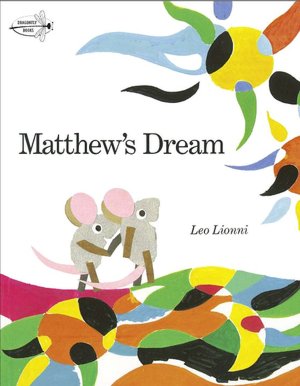
I absolutely love Leo Lionni picture books, one of my favourites is Matthew's Dream:
Matthew dreams of becoming a painter. He lives in a dusty attic with his parents. Through his vivid dreams, he becomes more confident of his decision to create beautiful paintings.


 This art project, using Matthew's Dream caught my eye on Mrs Brown's Art page:
Students read the book Matthew's Dream by Leo Lionni. They then created abstract designs based on the story. This is a great opening project for early in the year as students are getting adjusted to their classmates, the artroom, and the art supplies.
So fun! I can't wait to give this a try. I really suggest checking out Mrs. Brown's Art page. She has several art activities from K-5. I plan to continue to feature a couple on my blog because I just love them so much!

Here are some more activities using Leo Lionni's books:

Wednesday, 6 June 2012

The Dot by Peter Reynolds - Art Lesson


This blog by a BC TTOC had a great Art project she tried recently that I wanted to share. She writes:
Book: The Dot by Peter Reynolds. I was able to find it in the school library and I did not need any other materials other than the students' own pencil crayons and some large square pieces of paper that I took a few minutes to cut from 11x17 sheets. The Dot is a wonderful book about believing in yourself and believing in your artwork. Here is a good synopsis. Peter Reynolds is passionate about inspiring kids to be creative and take risks and to feel proud of and confident in their artwork
She used the art lesson found here after reading the book and showing a short youtube clip of the story.

I can't wait to try this - I love these types of activities and the kids do also! As a TTOC it is always good to have these kinds of lesson plans ready - just in case!

See more Here

Middle Schools

I love Middle School.

As a teacher I love them, as a student I think I would too. I hated Junior High School. First, as a Grade 7 we were at the same school as 5 year olds. Then, we would jump to Jr. High with Grade 10s. It seems so strange now that the grades within schools has changed.

Middle School in Coquitlam consists of blended classes in some cases, team teaching and pods,

As much as I love Middle Schools, I also love reading and learning new perspectives and ideas.
This blog explores how Middle Schools may hinder growth.

One point this post makes I would like to address:

3. They lose the chance to be leaders / role models for younger students.
This is huge. The K-8 model isn’t perfect and may be difficult because of the size of the student body, but in it, seventh and eighth graders become natural role models and can assume leadership positions to younger students.
While I agree wholeheartedly that what I loved as a Grade 7 students in Elementary School was the opportunity to become a leader, the Middle School model indeed still offers this.

First, Elementary Schools which are K-5 allow Grade 4s and 5s to take on a leadership role at a younger age than in previous Elementary schools that were K-7. My daughter, for example, is in Grade 3 and very much looking forward to next year when she can start being a lunch time monitor for the Primary grades and be a part of the school leadership team.

Second, many Middle Schools are close to Elementary Schools and have opportunities that pair up the schools for things such as buddy reading, volunteering at Sports Day or other activities.

Moreover, Middle Schools allow a safe environment for those often awkward years with three grades (6-8) close in maturity and development to learn and grow together with additional support and programs suitable for that level. By providing an inclusive, environment adolescents can engage in learning through collaboration and exploration that can be more challenging in an Elementary school setting with the young ones.

Overall, I am a strong supporter of the Middle School Program and Philosophy. Though I do enjoy reading research and various perspectives on education particularily Middle School.

Some interesting Middle School sites:

http://www.amle.org/AboutAMLE/ThisWeBelieve/The16Characteristics/tabid/1274/Default.aspx

http://www.cdgms.com/school_info%20pages/middle_philosophy.html

SD43 Parent Handbook "Transition to Middle School"