Opinions expressed on this blog are my own and do not represent any other organization or affiliation I may have.
Showing posts with label pe. Show all posts

Tuesday, 19 March 2013

Ice Breaker: Human Knot

This used to be my go-to game when I ran summer camps for years and years in my younger, pre-teaching years....

Summary: A good icebreaker or teambuilding activity for new people to learn to work together – in close physical proximity! The goal is to figure out how to untangle the human knot without letting go of hands.

Ages: 12 and up. Recommended number of people: 7-200 (group sizes of 10 are ideal). Messiness factor: Might break a sweat – (close proximity – hope you’re not claustrophobic!). Materials required: None. Recommended setting: Both indoors or outdoors.

Human Knot Game
Goals of the Human Knot Game:
  • Team building and communication
  • Problem solving
  • Ice-breaker or get to know others better
Setup for the Human Knot Game:
This game is versatile in that multiple group sizes can play. Form groups of about 10 people each. Have each group standing, facing towards each other, in a circle. Each person should be standing shoulder to shoulder. First, instruct everyone to lift their left hand and reach across to take the hand of someone standing across the circle. Next, have everyone lift their right and reach across to take the hand of another person standing across the circle. Make sure that no one is holding hands with someone standing directly beside the person.

How to Play the Human Knot Game
To play, the groups must communicate and figure out how to untangle the knot (forming a circle of people) without ever letting go of any hands. If you wish, this icebreaker can be played competitively, in which the facilitator says “Ready.. Set.. Go!” and has all the groups race to become the first group to finish. If any group member lets go of a hand (breaks the chain), then the group must start from the beginning, or you could impose a penalty/punishment for that person (e.g. wear a blindfold).

This game typically takes 15-30 minutes to complete. You can impose a time limit if you wish to make the game more challenging. When you are done with the Human Knot activity, you can ask some debrief questions if you wish, such as “How well did you group work together? What strategies did your group adopt? How did it feel to solve the game?” etc.

Variations
To increase the difficulty level, you can either (1) blindfold some of the players or (2) require that the game be played silently (no talking).

Photo and instructions via: http://www.group-games.com/ice-breakers/human-knot-icebreaker.html

Friday, 15 March 2013

Game: Four on a Couch

Four On A Couch

Name of Group Game:
Four On A Couch


Type:
Indoor


Number:

Medium Group (12 - 19 people)
to

Large Group (20 + people)

Age: Middle School – Adults
Time: 20 - 30 minutes


Four On A Couch Set-up:
how to play four on a couch game
Summary: Fun strategic memory game for medium to large groups. Great for teenagers to adults!
Goal: Try to get four of your teammates on the couch!
Preparation:
- Four marked chairs or a "couch" that can fit four people. Four people must sit on the couch at the beginning of the game. Everyone else can sit on the ground in a circle or in unmarked chairs, with the outer circle boundary including the four special chairs/"couch".
- One piece of paper for every participant and pens
- A bag to collect the pieces of paper

How to Play Four On A Couch:
1. Split everyone into two equal teams and ask them to sit in a circle. Add one empty seat in the circle. When starting, each participant needs to sit next to his/her opponent on both sides (alternating team members), including the four people on the "couch". Hand out the pieces of paper and pens (one per person). Ask everyone to write their names on their piece of paper and to put their pieces of paper in the bag.
2. After this, pass around the bag and ask everyone to draw one piece of paper with someone else's name on it. Each person should read their own piece of paper without letting anyone else know what his or her paper says.

3. Explain that the goal of the game is to get four of their teammates on the couch. The person on the right of empty chair/spot calls the name of a game participant. The person whose piece of paper has the called name sits in the empty chair. Whoever sits on the right of the new empty chair calls out another name.

4. Start by asking the person to the right of the empty chair to call a name. The person with the piece of paper with the written name sits in the empty chair. Continue this pattern. The first team to have four of their members on the couch wins the game.


Source: http://www.greatgroupgames.com/four-on-a-couch.htm

Saturday, 8 December 2012

Gym Game: Fruit Basket


As a TTOC, it is important to have some gym games in your 'bag of tricks' a variety of tag games and activities that require little (or no) equipment is best, just in case you don't have access to, or can't find certain equipment in the gym storage.


A student favourite I play is with them is 'fruit basket'

  1. I have kids all line up on one side of the gym, with one or two people "it" in the middle.
  2. I name them off with a fruit name (like numbering them off, but with fruit names not numbers)EX: apple, orange, watermelon, grape, apple, orange, watermelon, grape. (You can, of course, use any fruits you wish)
  3. The "it" person(s) yell a fruit and all the kids named that fruit, must run to the otherside of the gym. The "it" person(s) may also yell "fruit basket" to have everyone run.
  4. If the "it" person(s) tag a fruit, they now join them to be "it"
This game is great fun and you can change the fruits you use, or how many of each fruits there are and so on.

Yesterday, I TTOCd in a Montessori grade 4/5 class and learned their version of fruit basket which involved pinnies.

The game was essentially the same with a few exceptions:
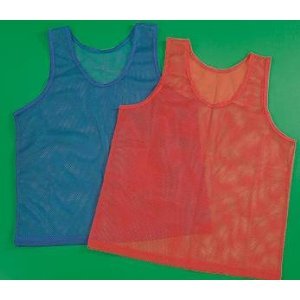
  1. All students had a pinnie that hung out of their pocket or belt like a "flag" Students chose red, yellow, green or blue pinnies (as that is what this school had in stock)
  2. The "it" person yelled out a colour (or "fruit basket" for everyone to run) and the people would run across the gym
  3. If the "it" person grabbed the pinnies/flags from the runner, the runner joined them to be "it"


What I liked about this was that it wasn't just "tag" but like "capture the flag" in that the "it" person(s) had to retrieve a runners flag/pinnie not just tag them. Of course, you had a few runners that rigged the pinnie/flag to be harder to get (or held it as they ran) but those incidents were quickly corrected.

Their teacher had obviously encountered this as well because the students informed me (after the gae of course) the class rules were 9" or more hanging, no holding, no tying, no cheating.


Friday, 11 May 2012

PE Game: Survivor

When I was a student teacher I participated in the teacher Survivor. Once or twice a week during lunch hour the teacher's would partake in crazy activities. I ate dried sardines, through hockey sticks through goals, did a junk food relay, stood on a tin can as eggs flew at me, and numerous other crazy activities the school leadership team developed. I placed 3rd, which I was quite proud of considering I was a student teacher, but it was fun and I love Survivor themes activities.

I found this activity and thought it sounded like an AWESOME PE game/activity for team building, co-operative learning, problem solving, team work, and just plain fun! A lot of prep and supplies required, so not likely something a TTOC would just "do" but worth reading through and using in the future (or even parts)


Name of Activity: Survivor Houghton (or school/class name)

Purpose of Activity: The purpose of the activity is to have students work together to solve challenges while also incorporating fitness activities.
Suggested Grade Level: 9-12

Materials Needed:

Survivor Houghton Handout

The following equipment is needed for this activity:

- 4 tribal flags (wood stick with bandana attached—each team has a different color)
- 16 resource challenge cards (4 water, 4 food, 4 fire, and 4 shelter)
- gym floor tape
- 4 laminated turkey targets
- 4 playground balls (4 inches in diameter)
- 4 large Gatorade jugs (or other large container)
- 4 folding mats
- 20 noodle pieces (about 1½ inches in length)
- 4 laminated fire cards
- 4 unassembled camping tents
- bandanas/blindfolds for all students (each tribe has its own color)
- 4 agility ladders taped on gym floor
- 12 jump ropes (varied lengths)
- 4 sets of 2 small cones with rope spread from one cone to the other

Description of Idea

Divide the students into four teams called tribes. Each team is given a tribal flag with their tribal name on it and each player is given a bandana. The tribes are “stranded” at different locations throughout the “western New York wilderness” (gym) and are given a few essential supplies including: 4 resource challenge cards, 1 raft (folding mat), 1 arrow (playground ball), 5 logs (noodle pieces), 1 unassembled shelter (tent). The tribes have 30 minutes to obtain the resources of water, food, fire, and shelter. These resources are obtained by successfully completing the challenge listed on the resource challenge cards. (Each tribe has a resource challenge card for water, food, fire, and shelter). The resources can be obtained in any order.

At the end of 30 minutes, tribes that have successfully obtained all the resources have earned the right to participate in the final Survivor Houghton team challenge. For the final challenge, tribes must work together to get all tribal members through the obstacle course as quickly as possible. The first tribe to have all of their tribal members successfully through the obstacle course wins and earns the title “Sole Survivor”.
Survivor Houghton Handout
Variations:
NOTE: This idea was created for the high school I teach at in western New York and uses equipment that is available within our PE program. The resource challenge cards can be creatively adapted to fit the location and available equipment of a different school.

Assessment Ideas:
After the activity has been completed, discuss the questions below with the students. Be sure to get responses from members representing all the tribes.

- While completing the Survivor Challenge, what is one way your tribe worked well together?
- While completing the Survivor Challenge, what is one way your tribe could have improved in working together?
- If you could go back as a tribe and re-do one part of the Survivor Challenge, what would it be? How would you do things differently?

Here is the link to the handouts/instructions in PDF format:
http://www.pecentral.org/lessonideas/Survivor_Houghton.pdf

When I was a stude

Saturday, 5 May 2012

BIG BASE BALL

I was teaching at Middle School Friday and we had Community PE, which is once a week when 4 classes share PE. The teacher I was in for had taught two classes a new game that week so we split into two groups of two classes and taught the other two classes the new game called "BIG BASE BALL"

I loved it!

I can only describe it as a mix of california kick ball, soccer and baseball, all in one.

Bare with me as I try to explain how to play...

1. Two teams. One is on the bench, the other in the field.
2. Everyone on the bench gets a turn then the teams swap bench/field.
3. There is a net (or cones) set up beside the "home plate"
4. There are 4 GIANT bases. In the gym it was the yellow semi-circle/3 point lines at each of the 4 baskets  (not end baskets for a full gym game)
5. One player goes up and kicks the ball (like California kick ball, but no pitcher they just kick from home plate)
6. Player can run as many bases as they want as long as they are ON a base before the field team throws the ball into the net.
7. When the ball goes into the net, any bench team player NOT on a base is out. Field team can throw, kick, or walk up and PUT the ball into the net to stop play/get players out.
8. Each BIG BASE can hold as many players as they wish. Players can pass others, share bases, stay on a base or choose to run a base or more during any play, but they may not steal or come off the base early.
9. If the kicker's ball is caught by any field player the kicker is out.
10. If the kicker's ball hits the back wall of the gym it is a home run/grand slam.
11. We set up a "foul zone" which had two purposes. First, if the kicker did not kick it out of this zone, they were out. Second, the field team could not enter this zone until the ball exited this zone frmo the kick. This prevents field team from hovering and stopping kicks.
12. Kicker's could kick behind them, to the side, anywhere, as long as the ball made it past the "foul zone" line. Some even kicked/punted so the ball slowwwwly moved toward and finally outside the foul zone.
13. Once everyone has had a turn the teams switch (bench/field)
14. Each person who runs into home is one point.

Let me know if any of these instructions don't make sense or if you have any questions leave them in the comments and I will explain further. I will also try to post diagrams if I can.

This game was so much fun! I can't wait to teach it to more students!

Friday, 4 May 2012

Game: 4 Corners Soccer

This week I was teaching gym for Elementary School in the afternoons and wanted to choose an activity that was engaging, active, fun and kept them all physical.

4 corners soccer is one of my favourite PE games for all of those reasons. It keeps everyoen active, no one is left out, all abilities can enjoy it and the kids love it!

If you haven't played, let me explain:

1. each corner of the gym has a net (or use a gm bench to corner it off as a goal)
2. create 4 even teams (use pinnies if available)
3. Have teams go behind the nets when you blow the whistle twice (to signify the start of a new round)
4. Use 1-4 balls to keep everyone active
5. Ensure each team assigns a goalie each round (I make them rotate so everyone has a turn)
6. Create different "rules" for example only two teams at once (I often let the two who were out first the previous round go first) or "girls only" or if it's a split class one grade at a time - just to change it up.
7. Once scored on a team is "out" and sits/stands behind their net until next round.
8. With older students I award one point for first team out, 2, 3 and 4 points for last team out, with younger students, I emphasize it is fun and once you are out, it is not for long.

Here are some adaptations and other version of the game you may want to try:

http://www.eworkshop.on.ca/edu/dpa/pdf/DPA_7-8_4_corn_socc.pdf

http://www.mpeta.ca/documents/SAG/SAGHandouts2008/72%20CornerSoccer2.pdf

http://www.npsne.org/ms/staff/dreedy/4-CORNER%20SOCCER.htm


Monday, 30 April 2012

Action Schools! BC Resources for TTOCs

Action Schools! BC has a lot to offer teachers and some great things for TTOCs who wish to include some Daily Physical Activity or healthy lessons into their days with different classes.

The first cool thing I discovered was that they have established really cool activity Circuits for most schools in BC here. You can click your district, find a school, and load the map of the schools playground/field area for suggested activities/circuits to do with classes.

Besides that, they offer many FREE workshops. At the BCTF New Teacher's Conference, a rep told me they could do one for TTOCs and everyone gets some super handy supplies and lessons they can take with them into the classroom!
Their website has Tons of Resources including downloadable worksheets, handouts, posters, and activities about healthy eating, excersize, and more.

I always love the resources the schools have from Action Schools! BC - but was thrilled to see all the online resources and workshops available for teachers not attached to a school. I hope to book a workshop for our TTOCs next year!