Opinions expressed on this blog are my own and do not represent any other organization or affiliation I may have.
Showing posts with label games. Show all posts

Monday, 30 March 2020

Monday Math Games: Card Games

I have decided to post some math games each Monday for the next little bit. It is easy to google "Math Games" and come up with hundreds of ideas. I encourage you to do so!

Today, I wanted to look at some card math games since most people likely have a deck of cards at home. (FYI, you can ask your local casino for decks of cards [once this self isolation and social distancing ends] which they give for free to educators - in Vegas I asked and got 5 decks from one lady!)

Playing card suit - Wikipedia

Sorting

Crazy Sevens (Fan Tan)
  • one deck of cards including face cards
  • 2+ players (4-6 ideal)
  • concepts: sorting by suit, counting up, counting down
  • How to play
Counting On
  •  one deck of cards, remove face cards (J, Q, K, A, Jokers)
  •  1-2 dice 
  • 2+ players
  •  concepts: counting on from any number besides 1
  • How to Play
Builder's Paradise
  •  one deck of cards, remove face cards
  •  1+ player
  • concepts: counting, sequencing, sorting
  • How to Play


Addition

Addition War
  •  one or more decks of cards
  • 2+ players
  • K-secondary school
  • concepts: addition, greater than/less than, adding and other skills in variations
  • How to Play including some awesome variations to this old fave game
Pyramid
  •  one deck of cards, face cards removed, except Ace (which = 1 in this game)
  • 1+ players
  •  concepts: addition and "making ten"
  • How to play
Once Through the Deck
  • one deck with face cards removed
  • 1+ player

  • concepts: basic addition, multiplication
  • How to play

Place Value


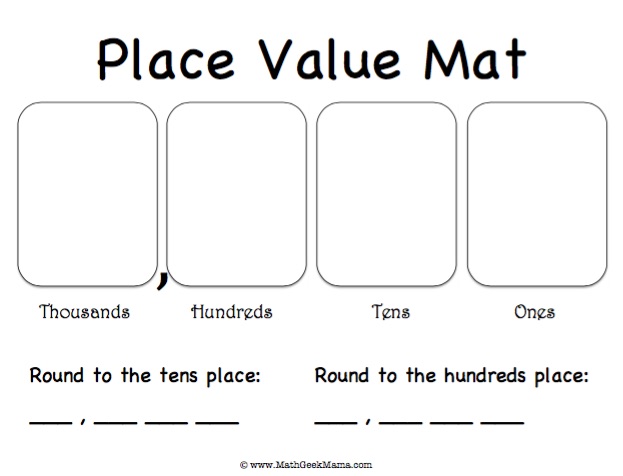
Place Value Mat

Place Value (with rounding)
  • one deck of cards with tens and face cards removed, use ACE as zero
  • 2+ players
  •  concepts: place value, rounding
  • How to play

Many more Math CARD Games here:
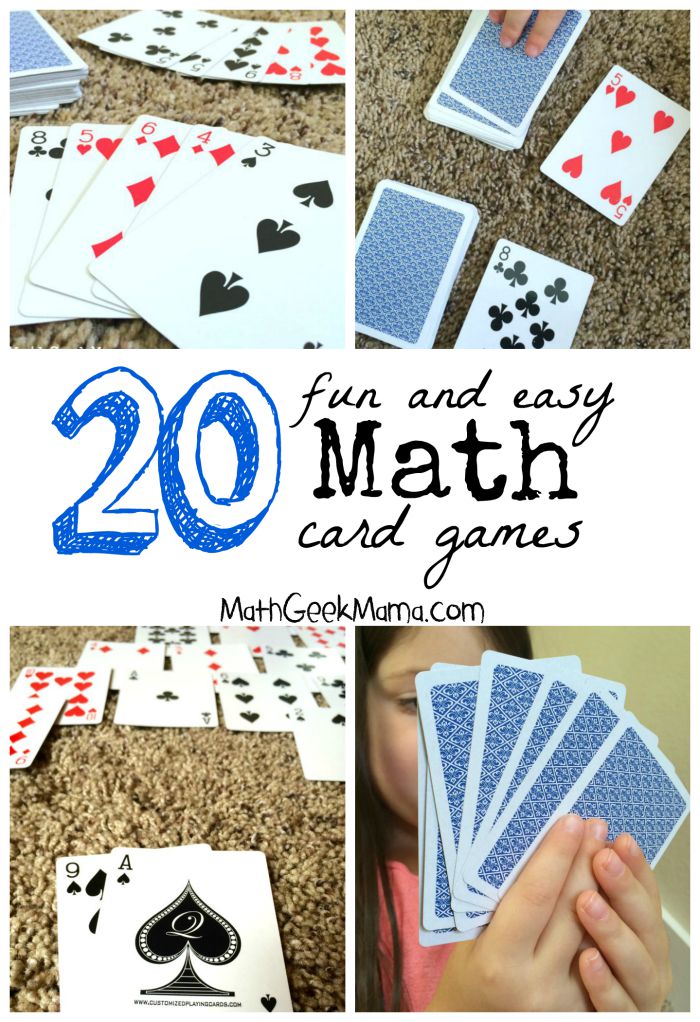

A great collection of fun math card games! These are easy, and in most cases all you need is a deck of cards!


Monday, 13 April 2015

KABOOM - Great Learning Game for Classrooms

I just found this game online and am obsessed! I can't wait to create a few versions of this activity for my classes!

WHY?


1. It is highly engaging!
2. It lasts for as long as you need it to!
3. It can accommodate nearly ANY content area/targeted skill!
4. It is quick to prep!
5. It costs next to nothing to make!


You need sticks, a cup/holder, and to determine which subject area you want to focus on.

For example - basic math facts:


Or maybe you need to glue on some items:


or labels/tags:


You can do this for vocab, definitions, math equations, sight words, rounding, parts of speech, synonyms, antonyms, story elements, the options are endless!


Once you decide and create - here is how to play...


1.  First student pulls out a popsicle stick.
2.  The student identifies the "answer" or "correct response."  If their answer is correct (determined by either a reference sheet or their peers) they get to keep the popsicle stick.  If they answer it incorrectly, the stick must go back in the cup.
3.  The students continue around the circle, selecting one popsicle stick at a time and answering their question.
4.  Any student who pulls a KABOOM! stick has to place all of the popsicle sticks they have accumulated back into the cup, leaving them with zero.  (It may sound harsh, but it happens OFTEN, so all students will at some point get "Kaboomed!"
5.  The game NEVER ENDS because eventually someone will get a Kaboom! and their popsicle sticks will go back into the cup to keep the game going.
 
Source: http://www.starrspangledplanner.com/2015/03/kaboom-possibly-best-center-game-ever.html

Tuesday, 27 January 2015

11 Vocab Review Games to Make the Learning Stick


Here are 11 classroom games with free downloadable reproducibles perfect for practicing new vocabulary or test facts. Hope you find them useful! 
  • Oranges to Oranges: Quick, define "chimerical"! Based on the popular game Apples to Apples, this is a great way to practice and expand on weekly vocab words or terms from your latest unit.
    oranges to oranges vocabulary game
  • Fun With Synonyms: Guess That Word: Can your students guess a word by its synonym? They can after playing this game! Having students create the cards—researching the synonyms—is an important part of the learning too!
    guess that word vocabulary game
  • Vocab-Categories: Just like with Scattergories, kids have to think and use vocab words creatively to win the game. The download includes letter cut-outs, vocab-category lists and make-your-own list cards.

    vocabcategories vocabulary game
  • Vocabulary Land Game Board: This is one of my favorites—I loved creating this board game! If you have access to a laminator, print and laminate 8 to 10 boards for your classroom and use dry-erase markers. Instant classroom game or language arts station!
    vocab land game board vocabulary game
  • You're on a Roll Dice Game: This game gives students the chance to improve their vocabulary skills while playing with their friends.
    on a roll vocabulary game
  • Vocabulary Checkers: To move checkers on the board, players must use the vocabulary word in the square correctly in a sentence. Challenge students to build on one another's sentences to tell a quick story or to make up the silliest sentences that they can.
    Checkers vocabulary game
  • Bracket Battles Vocabulary Game: With bracket battles, the best word always wins. Students have to sort the words into parts of speech to play. So you sneak in a little categorization practice at the same time!

    battle brackets vocabulary game
  • Bingo Vocabulary Game: Admit it, everyone secretly loves bingo. Now your students can play while simultaneously enhancing their vocabulary skills. Give away new pencils as the prize and maybe your students will finally give up those tiny stubby ones.

    vocabulary bingo game
  • Color Your Vocabulary Activity: Challenge students to creatively use their vocabulary words to label pictures. It's harder than it looks!

    color your vocabulary game
  • Picabulary Vocabulary Game: Divided into teams, students have to creatively draw out vocabulary word meanings for their teammates to guess. Chances are, they are going to make you draw too. Be forewarned!

    picabulary vocabulary game
  • Think-Tac-Toe: To execute their tic-tac-toe strategy (three in a row), students must complete the vocabulary activity within each square. Two students (or two halves of the class) can take turns choosing squares. If it ends in a draw, that means you snuck in more vocab practice!
    think tac toe vocabulary game

SOURCE

Wednesday, 21 May 2014

Bright Ideas: Multiple Choice Fun

Create fun multiple choice sticks for students. These are great for testing for understanding, games, activities, and more. Easy to make and keep in your classroom or in your 'Bag of Tricks' as a TTOC

Multiple Choice sticks for students
Nuts, washers and bolts can go through four sticks to create these fan sticks
Or one stick per students can have 4 choices on it (one per end, per side) 


Source

Thursday, 17 April 2014

50 Earth Day Activities

Next week is Earth Day... Here are 50 Earth Day Activities that work with natural materials, recycled materials, indoor crafts, outdoor activities and more....

50 Earth Day Activities for kids | TinkerLab

Thursday, 3 October 2013

Educational Activities for Popcorn Month

October is popcorn month. I love popcorn, especially movie theatre popcorn.... but there are some amazing ways to use popcorn in the classroom. As a TTOC this is a sure way to be memorable (but still educational) Similarly, I have used candy hearts as BINGO markers on Valentines day and other food items for learning.


This awesome site posted this:

  • Use kernels for an estimation activity.  FirstGradeParade posted this and included cute little autumn-themed, printable cards for students to estimate how many popcorn kernels will fit on it.  After they estimate, they count the kernels to see how close their guess was.
  • Have students describe popcorn using as many adjectives that come to mind.  Here is Room-Mom101's take on BabblingAbby's adjective activity.
  • Challenge students to create a box that holds the most popcorn.  Fawnnguyen did this activity for sixth-graders studying volume.
  • Make a popcorn book club discussion.  This is also an idea from FirstGradeParade, complete with printable discussion-starters.  Students discuss their books and eat popcorn.
  • Create popcorn writing by crumpling up popcorn-shaped papers with characters and settings written on them.  Students randomly choose the papers and write a story using the elements written on their papers.  This comes from ApplestoApplique and is similar to my Build-A-Story activity, but with a popcorn theme!

Sunday, 24 March 2013

Boggle Template

Another pintrest find: Free Boggle Template. This is great for fast-finishers, sponge, or for a TTOCs 'Bag of Tricks'

Also, see my previous post on Boggle Walls.

Tuesday, 12 March 2013

Free Download: Jeopardy Power point template

If you have a usb flash drive you take with you to TTOC, or a laptop, this is a great something to have saved for "whenever"

This site has a free download of a jeopardy powerpoint. If you are in a classroom with a SMARTboard or projector this is an awesome, engaging way to make lessons exciting. You can edit it to any type of question/answer.... I love it!


Monday, 11 March 2013

Game: Fish Bowl

I absolutely love activities and games TTOCs (Subs) can use in a variey of classes, levels, schools, subject areas. When I read this it sounded like something I would love to try.

FISHBOWL

Summary: Fun-filled word and memory game- Charades, Taboo and Password combined! Little preparation required.
Goal: The team with the most points wins the game.
Preparation:
- Pens
- Paper (3 pieces of paper for each person playing)
- A container to hold the pieces of paper
- Timer

How to Play Fishbowl:
1. Separate everyone into two equal teams (Team A and Team B). Have each person take three pieces of paper and write any word or familiar short phrase on each piece of paper. Have each person fold their pieces of paper in half and put them into the container. There are three rounds in Fishbowl: 1) Taboo 2) Password 3) Charades.

2. Round 1: Taboo
Team A needs to select someone to go first, while Team B needs a volunteer to watch the timer (set at one minute). The person from Team A will grab a piece of paper from the container and try to have his/her teammates guess the word on the paper using only use words and sentences as hints, without using any motions, "sounds like...", or spelling hints. (For example, if the word is "ribs", the person can say "baby back ___"). The person tries to have their team guess as many words as they can within one minute. The teams will need to remember the guessed words/phrases for subsequent rounds.
If the team is unable to guess the word/phrase, the person has the option to "pass", puts the word/phrase back into the container and continues with a new word/phrase. The person can only pass once during his/her one minute.
After one minute, Team A counts the number of successfully guessed words/phrases. Each guessed word/phrase counts as one point. Team B is next, and selects a volunteer from their team to start. A person from Team A will watch the timer, to be set at one minute. This alternating process continues until all of the words from the container run out. When the words run out, place all the words/phrases back into the container for the second round.
3. Round 2: Password
With the same style as the first round, the next team will select someone to go first, with the other team sets the timer for one minute. However, in this round, the person can use only one word as a hint for their team to guess. (For example, if the word is "ribs", the person can say the word "bone"). The team needs to recall the words/phrases in the previous round. Once all the words in the container runs out, place all the words back into the container for the third round.

4. Round 3: Charades
In this final round, the person needs to act and use motions as hints for their team to guess the word/phrase. (For example, if the word is "ribs", the person can point to their rib cage). When all the words run out, tally all the points. The team with the most points wins the game. 


Source: http://www.greatgroupgames.com/fishbowl

Wednesday, 27 February 2013

Busy Work Ideas for TTOCs to try


In the Reality 101 workshop I do for TTOCs we talk about what is in our 'Bag of Tricks' and how we stand out and connect with students in a variety of classes.

I always enjoy hearing some strategies new teachers and TTOCs use. I remember, to this day, a TTOC (sub) I had as a child who drew a parrot on the board. She told us if we worked hard that day she would teach us how to draw the parrot.... and she did! She taught us in a simple, step-by-step way that I still remember and doodle! So, of course, it is something I enjoy doing and when I return to a school, kids REMEMBER me teaching them to draw this parrot!

Another thing I like to pull out from time to time is sign language. As a kid, a boy in my class had a sister who was deaf and I learned some basic signs and the alphabet. My nephew is partially deaf and learns sign language with my sister, so I like to practice with them also. Sometimes I will teach students the letter their name starts with, or colours, or something basic they can use. 

Something else I have seen done by a TTOC friend of mine (though I don't have the skills to make it happen) is teaching the kid origami... love it!


Here are some more Busy Work Ideas:

  • Classroom Contest
  • Teach First Aid
  • Teach About Animals
  • Teach Foreign Phrases
  • Explore Encyclopedias
  • "What if" Talk / Essays
  • Read a Story
  • Draw Pictures
  • Make Improvised Music
  • Write / Read Limericks
  • Write Story
  • View Optical Illusions
  • Perform Magic
  • Crossword Puzzles
  • Word Search Puzzle(s)
  • Play Bingo
  • Jigsaw Puzzles
  • Play Hangman
  • Paper Airplanes (Contest)
  • Sing a Song
  • Play 20 Questions
  • Teach Juggling
  • Draw On Chalkboard

  • (From Substitute Teaching Tricks of the Trade) 

    Saturday, 8 December 2012

    Gym Game: Fruit Basket


    As a TTOC, it is important to have some gym games in your 'bag of tricks' a variety of tag games and activities that require little (or no) equipment is best, just in case you don't have access to, or can't find certain equipment in the gym storage.


    A student favourite I play is with them is 'fruit basket'

    1. I have kids all line up on one side of the gym, with one or two people "it" in the middle.
    2. I name them off with a fruit name (like numbering them off, but with fruit names not numbers)EX: apple, orange, watermelon, grape, apple, orange, watermelon, grape. (You can, of course, use any fruits you wish)
    3. The "it" person(s) yell a fruit and all the kids named that fruit, must run to the otherside of the gym. The "it" person(s) may also yell "fruit basket" to have everyone run.
    4. If the "it" person(s) tag a fruit, they now join them to be "it"
    This game is great fun and you can change the fruits you use, or how many of each fruits there are and so on.

    Yesterday, I TTOCd in a Montessori grade 4/5 class and learned their version of fruit basket which involved pinnies.

    The game was essentially the same with a few exceptions:
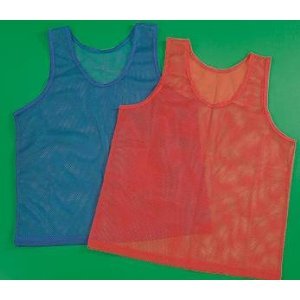
    1. All students had a pinnie that hung out of their pocket or belt like a "flag" Students chose red, yellow, green or blue pinnies (as that is what this school had in stock)
    2. The "it" person yelled out a colour (or "fruit basket" for everyone to run) and the people would run across the gym
    3. If the "it" person grabbed the pinnies/flags from the runner, the runner joined them to be "it"


    What I liked about this was that it wasn't just "tag" but like "capture the flag" in that the "it" person(s) had to retrieve a runners flag/pinnie not just tag them. Of course, you had a few runners that rigged the pinnie/flag to be harder to get (or held it as they ran) but those incidents were quickly corrected.

    Their teacher had obviously encountered this as well because the students informed me (after the gae of course) the class rules were 9" or more hanging, no holding, no tying, no cheating.


    Sunday, 13 May 2012

    Silent ABC Game


    Sometimes, as a TTOC you just need a quiet, but educational game to play with the young ones.

    I prefer circle games, ABC games, brain teasers, but this game helps elementary school students learn how to alphabetize words, is engaging and interactive as they move around. The challenge is the "silent" part, but with reminders, it can be done!

    You can use spelling words or words from other subject areas, just make sure they are age/level appropriate.

    Each student receives a piece of paper or card with one word on it.

    When the teacher rings a bell, the students silently arrange themselves into alphabetical order based on the words on their cards.

    Once in order, the students work together to determine if they have accomplished their goal and are indeed in the correct order.

    For more of a challenege have multiple words with the same first letter, so they must look at second letter and so on.


    Source: Quiet Classroom Games | eHow.com http://www.ehow.com/list_6072197_quiet-classroom-games.html#ixzz1uUZwHxoy

    Saturday, 5 May 2012

    BIG BASE BALL

    I was teaching at Middle School Friday and we had Community PE, which is once a week when 4 classes share PE. The teacher I was in for had taught two classes a new game that week so we split into two groups of two classes and taught the other two classes the new game called "BIG BASE BALL"

    I loved it!

    I can only describe it as a mix of california kick ball, soccer and baseball, all in one.

    Bare with me as I try to explain how to play...

    1. Two teams. One is on the bench, the other in the field.
    2. Everyone on the bench gets a turn then the teams swap bench/field.
    3. There is a net (or cones) set up beside the "home plate"
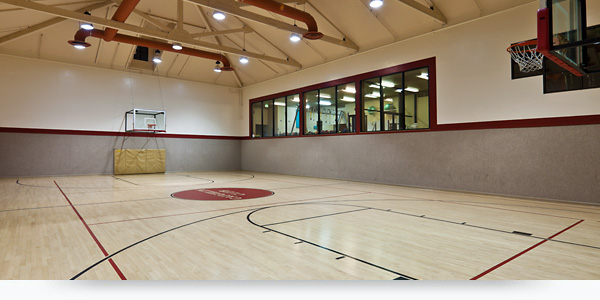
    4. There are 4 GIANT bases. In the gym it was the yellow semi-circle/3 point lines at each of the 4 baskets  (not end baskets for a full gym game)
    5. One player goes up and kicks the ball (like California kick ball, but no pitcher they just kick from home plate)
    6. Player can run as many bases as they want as long as they are ON a base before the field team throws the ball into the net.
    7. When the ball goes into the net, any bench team player NOT on a base is out. Field team can throw, kick, or walk up and PUT the ball into the net to stop play/get players out.
    8. Each BIG BASE can hold as many players as they wish. Players can pass others, share bases, stay on a base or choose to run a base or more during any play, but they may not steal or come off the base early.
    9. If the kicker's ball is caught by any field player the kicker is out.
    10. If the kicker's ball hits the back wall of the gym it is a home run/grand slam.
    11. We set up a "foul zone" which had two purposes. First, if the kicker did not kick it out of this zone, they were out. Second, the field team could not enter this zone until the ball exited this zone frmo the kick. This prevents field team from hovering and stopping kicks.
    12. Kicker's could kick behind them, to the side, anywhere, as long as the ball made it past the "foul zone" line. Some even kicked/punted so the ball slowwwwly moved toward and finally outside the foul zone.
    13. Once everyone has had a turn the teams switch (bench/field)
    14. Each person who runs into home is one point.

    Let me know if any of these instructions don't make sense or if you have any questions leave them in the comments and I will explain further. I will also try to post diagrams if I can.

    This game was so much fun! I can't wait to teach it to more students!

    Monday, 30 April 2012

    Action Schools! BC Resources for TTOCs

    Action Schools! BC has a lot to offer teachers and some great things for TTOCs who wish to include some Daily Physical Activity or healthy lessons into their days with different classes.

    The first cool thing I discovered was that they have established really cool activity Circuits for most schools in BC here. You can click your district, find a school, and load the map of the schools playground/field area for suggested activities/circuits to do with classes.

    Besides that, they offer many FREE workshops. At the BCTF New Teacher's Conference, a rep told me they could do one for TTOCs and everyone gets some super handy supplies and lessons they can take with them into the classroom!
    Their website has Tons of Resources including downloadable worksheets, handouts, posters, and activities about healthy eating, excersize, and more.

    I always love the resources the schools have from Action Schools! BC - but was thrilled to see all the online resources and workshops available for teachers not attached to a school. I hope to book a workshop for our TTOCs next year!